Patitz Didn't Look Like Anyone Else
In 1983 a seventeen-year-old competitive horse rider from Skanör entered an Elite model contest in Stockholm and came third. The prize was a trip to Paris and a contract with a short shelf life. Then nothing happened. Vogue, writing about her five years later, put it without decoration: a star was not quickly born, and Tatjana found no work for a year.
She had been born in Hamburg to an Estonian dancer and a German travel writer, raised on the Swedish coast, riding since she was seven, and she had trained as an actor rather than as a mannequin. For a year Paris had no use for any of it.
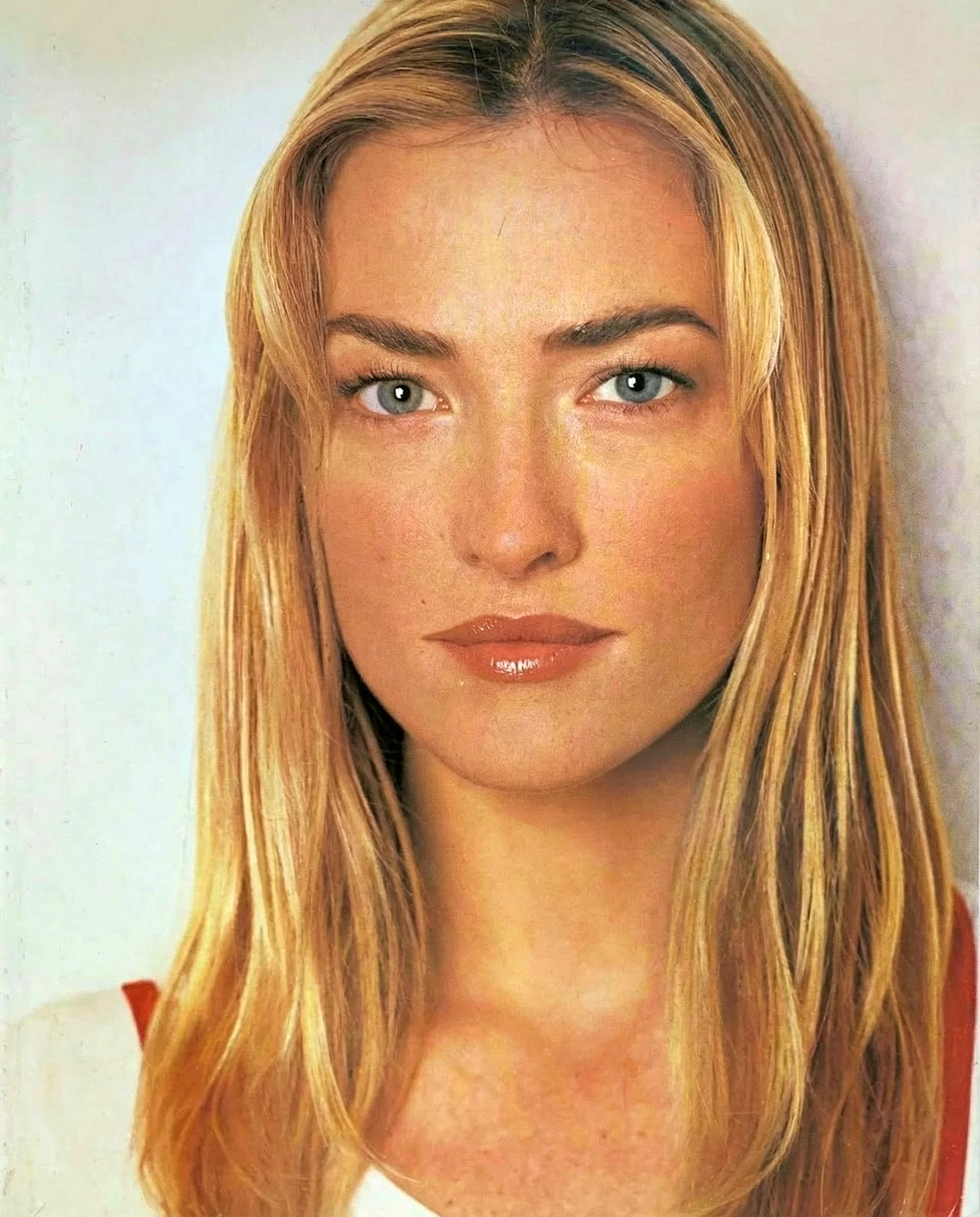
Almost nothing is happening in this photograph and it is still difficult to look away from. No styling to speak of, hair parted in the middle and left alone, a plain wall behind her. The face does all of it: the long oval, the set of the eyes, a mouth that isn't quite smiling and isn't withholding either. She told Vogue in 1988 that people had always said she looked special, that she didn't look like anyone else, and that she was going to make it because of that. Read cold it sounds like bravado. Look at the picture and it reads as a technical assessment. What separates her isn't a feature you could list, though. She isn't doing anything for the camera, and that turns out to be the whole career.
Peter Lindbergh worked it out first. In 1988 he took six models to a beach at Malibu, put them in white shirts, and let them behave like people rather than mannequins. Patitz stood out in a frame designed to level everyone. Her obituary in the Guardian named the mechanism: among all those wind-mussed, sun-smudged women having a good time, she seemed to be inhabiting happiness rather than performing it. The others are doing delight at the lens; she is in a good mood and the lens happens to be there, which no photographer can direct. Lindbergh went on shooting her, on and off, for close to thirty years, and he liked her best when she wasn't smiling. I've written before about the day those shirts were shot, and Patitz is the reason that image keeps working.
Then January 1990, the British Vogue cover, five women in a row, and George Michael seeing it and deciding those were the faces he wanted lip-syncing "Freedom! '90." Jil Sander then kept her for years as the face of a house built on removing things while Chanel had her on the runway doing the opposite, a range most of that generation never got asked for. Anna Wintour called her the European symbol of chic, Romy Schneider meets Monica Vitti, and added the part that stings slightly: far less visible than her peers, more grown-up, more unattainable.
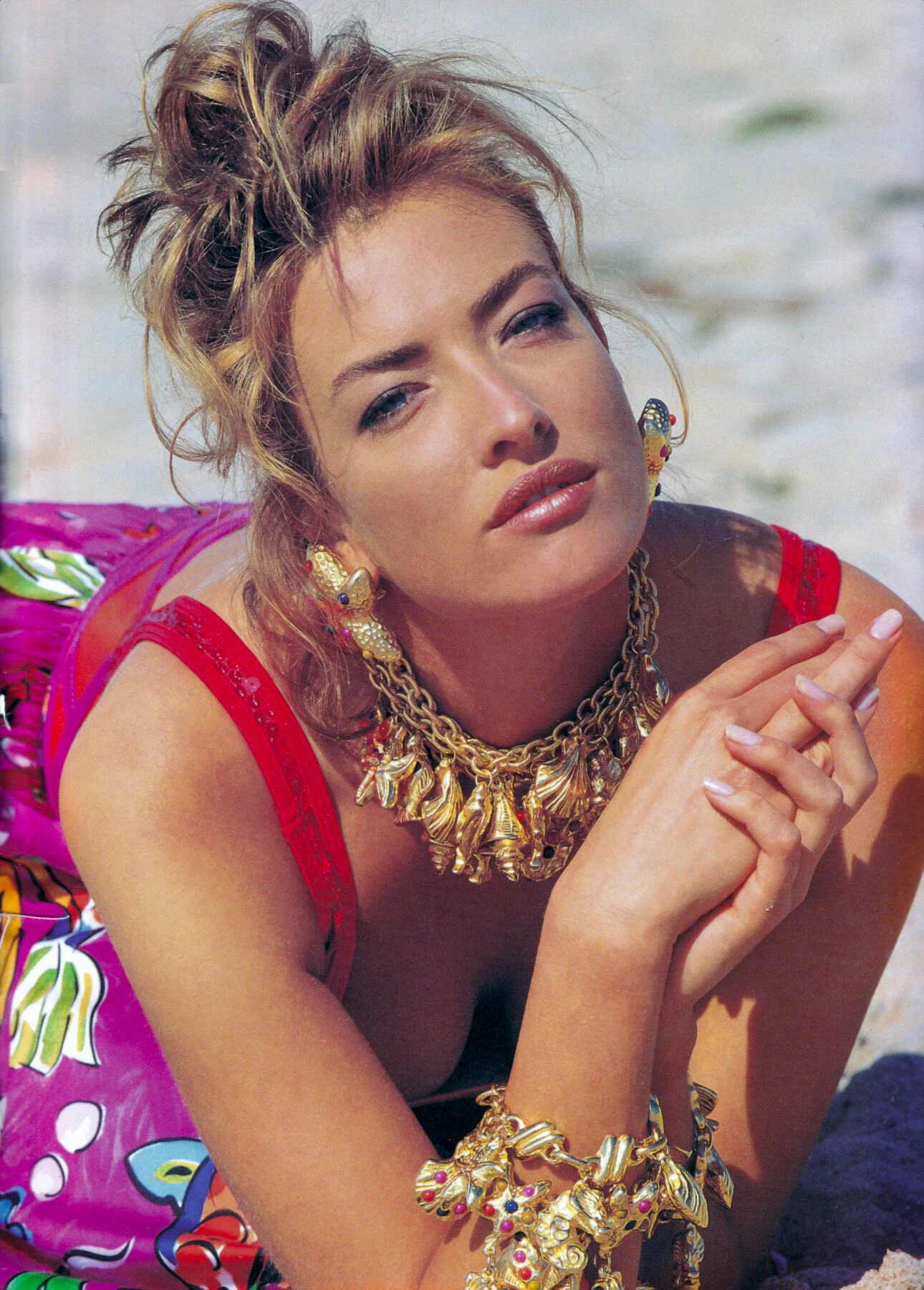
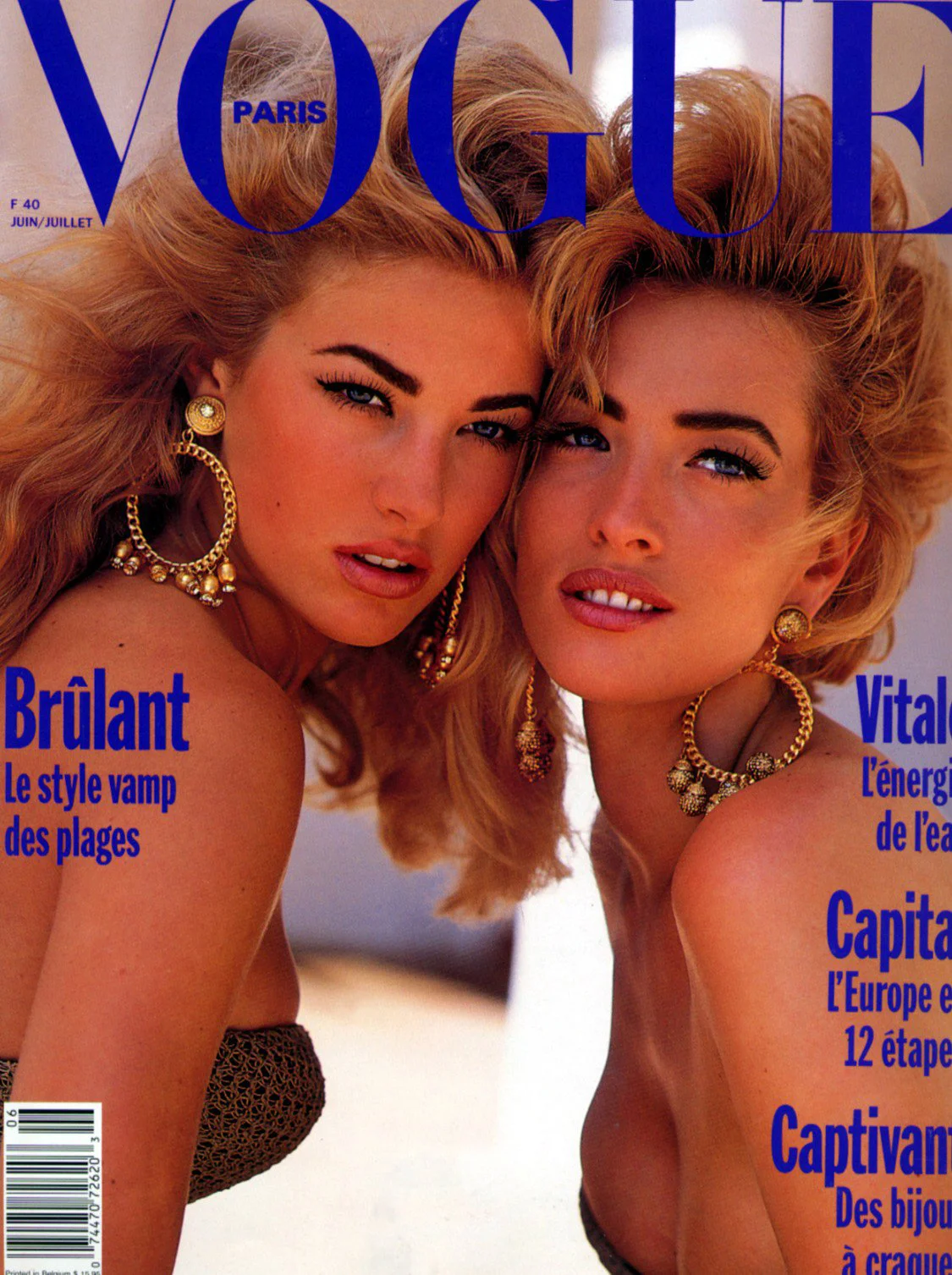
Which brings me to the problem with this post. Six American Vogue covers alone, two of them in consecutive months, which was a rare thing then, plus three decades of editorial and a run of photographers, Ritts, Penn, Demarchelier, Meisel, Elgort, who each found a different woman in the same face. Five images is not a selection from that, it's a rounding error, and I spent longer discarding than choosing. One I didn't have to agonise over, because an Escada page from 1991 already has a post of its own. Of the rest, I picked the gold and the sand because the jewellery is absurd and she carries it as though it weighs nothing, and the Vogue Paris cover with Elaine Irwin because two blondes at that wattage should cancel each other out and instead the page seems to run hotter. Both were straight swaps for something else an hour earlier.
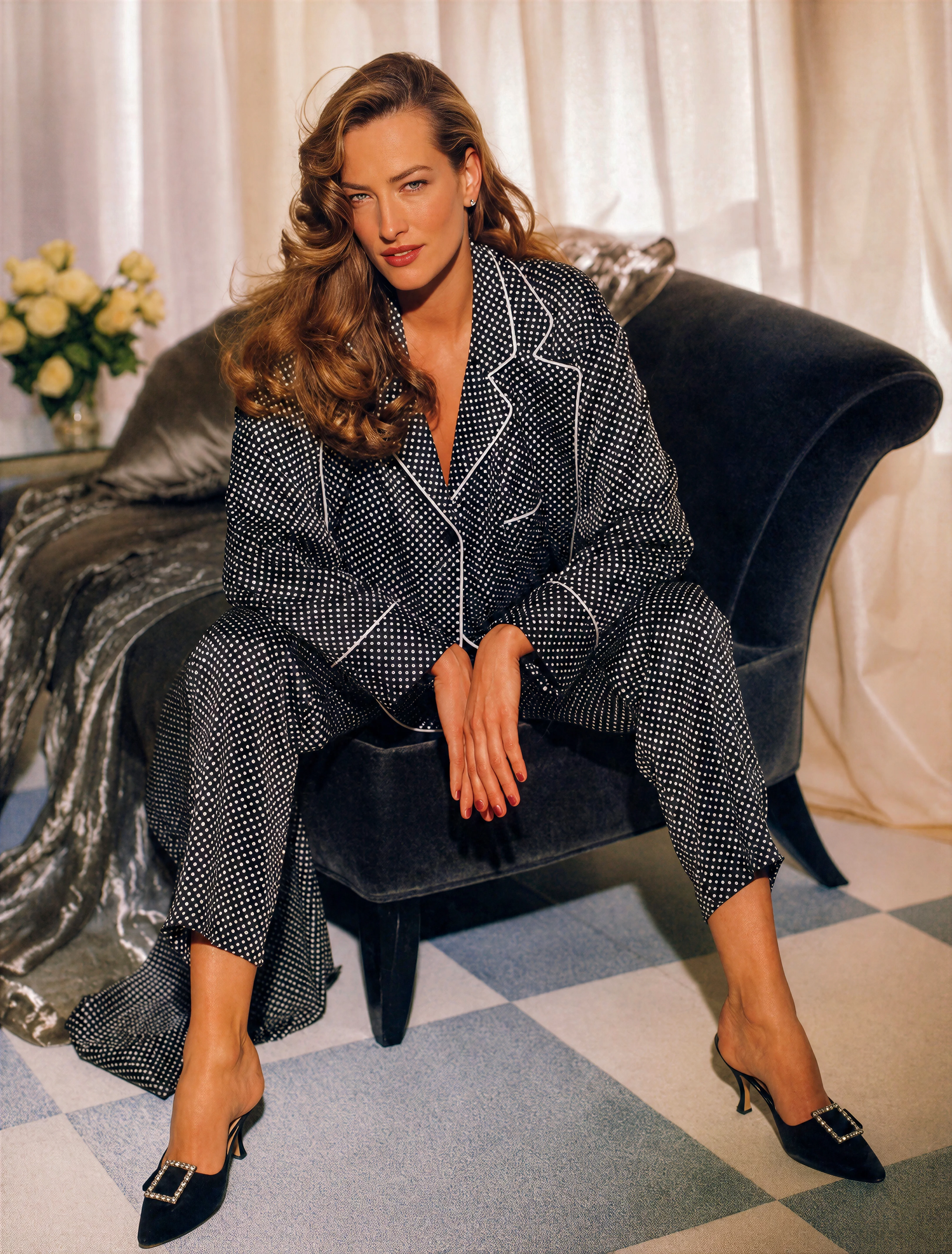
The polka-dot silk on the velvet chaise is the one I'd defend hardest, and the least to do with her face. She isn't posing so much as occupying, one hand laid over the other, the whole thing arranged and slightly bored, and it works because she looks like a woman who has somewhere else to be. That wasn't only a look. At the height of it she was flying forty times in a month, and she responded by moving to California to be near horses and open country rather than staying where the work was. Decades later she was still turning the word supermodel over, sounding it out syllable by syllable, saying she'd never really understood it, and I don't think that was modesty. She was describing a category she'd been filed into by other people.
Tatjana Patitz died in January 2023, at fifty-six. A couple of years before that she said she had never sold her soul, and it's a claim almost nobody in that industry gets to make without an argument following it.
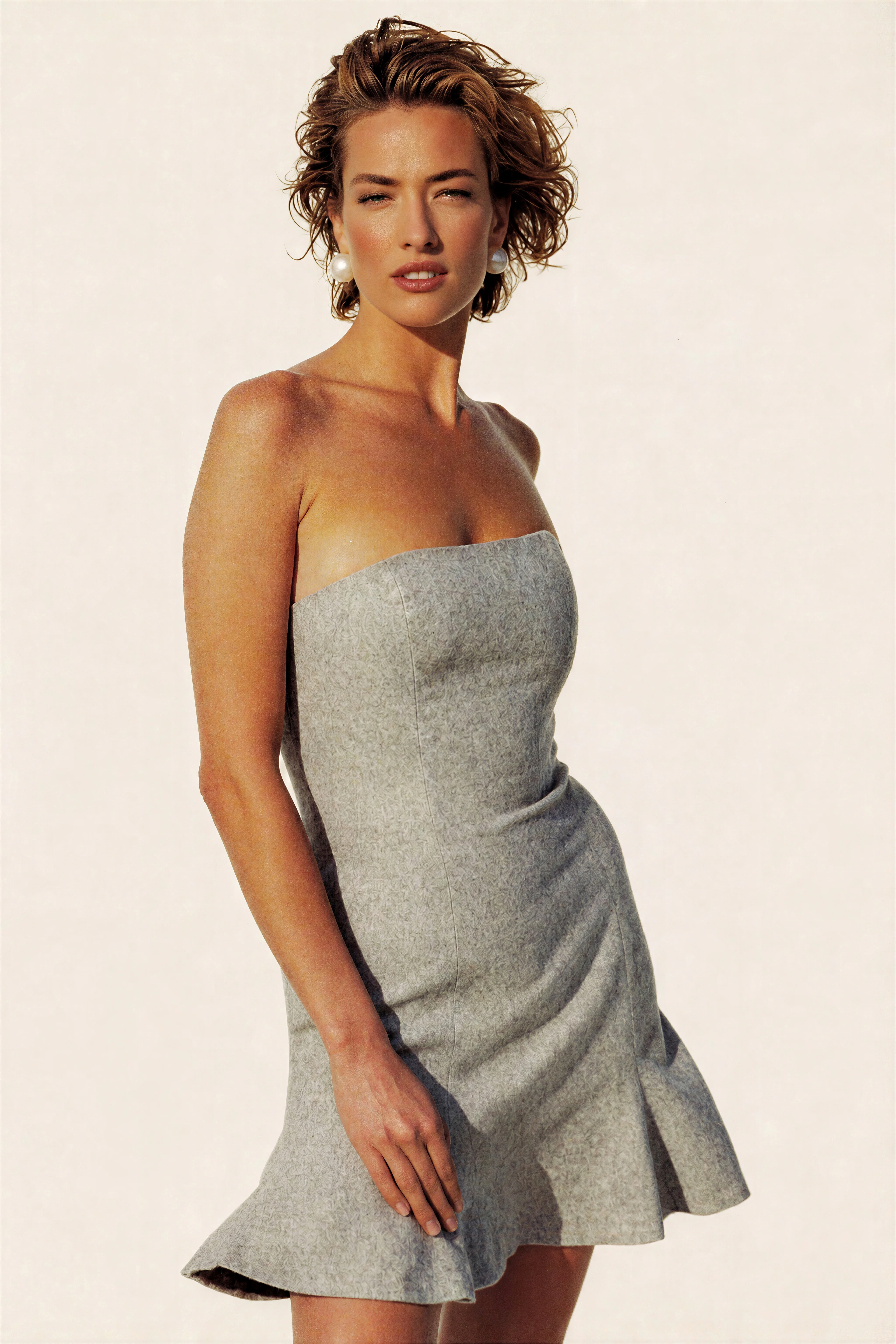
Which leaves the pictures, and this one is the whole argument in a grey dress: cropped hair, pearls, a blank studio, and nothing offered to the lens at all.
Sources:
-
Tatjana Patitz obituary — The Guardian
-
Tatjana Patitz on turning 50: The original supermodel is back in vogue — The Telegraph
Filed under Tatjana Patitz
This post is timestamped using Blockchain technology. Verify