Someone Billed for the Ribbon
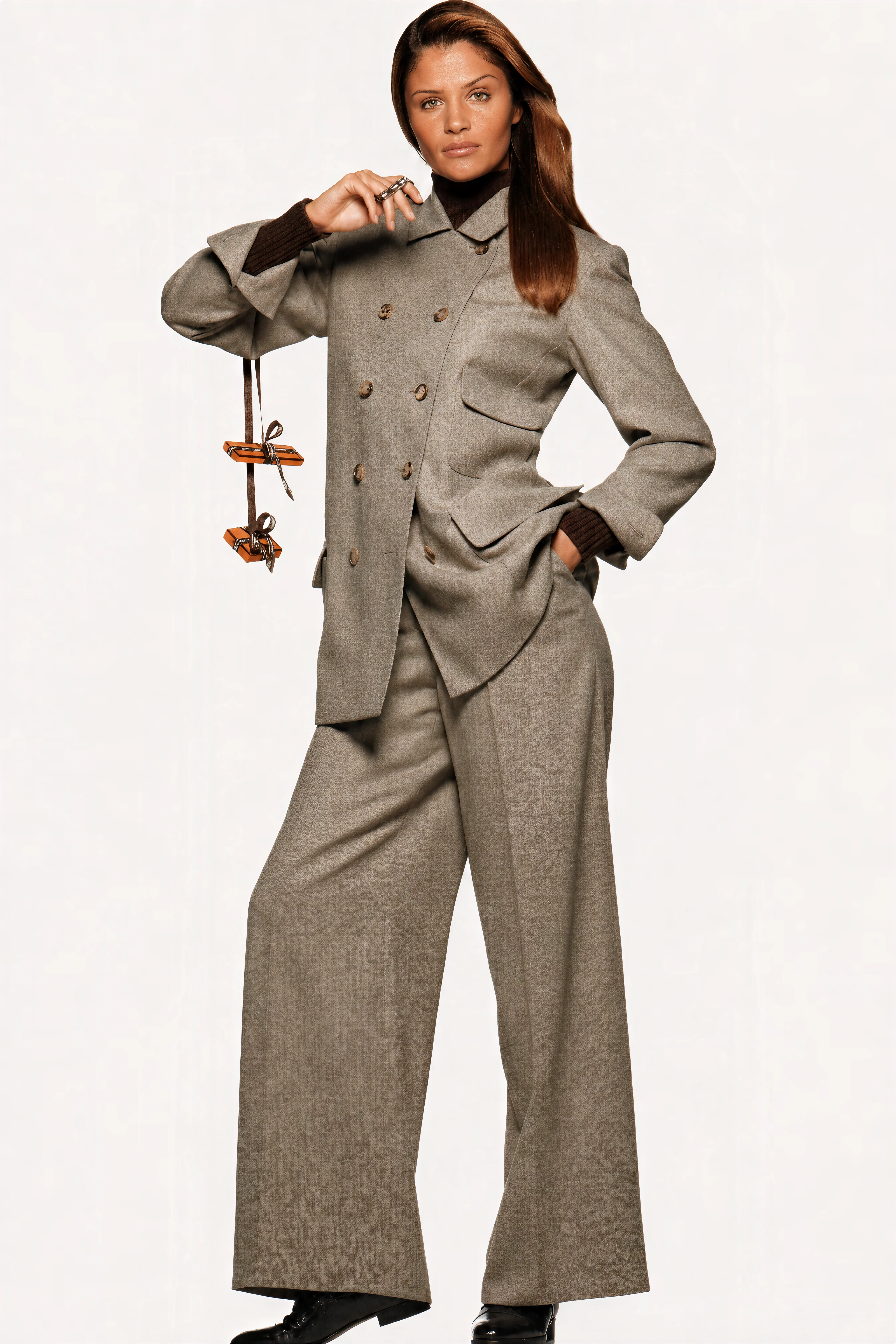
American Vogue, September 1993, carried the Hermès autumn campaign, and the model was Helena Christensen. In the first of them she stands in an oatmeal double-breasted suit with trousers wide enough to hide the boots, one hand raised, and two small orange boxes swing from her fingers on brown ribbons, like earrings she hasn't decided what to do with. Nothing in the picture explains them. They aren't shopping, they aren't being given to anyone, and they're much too small to hold the clothes she's wearing.
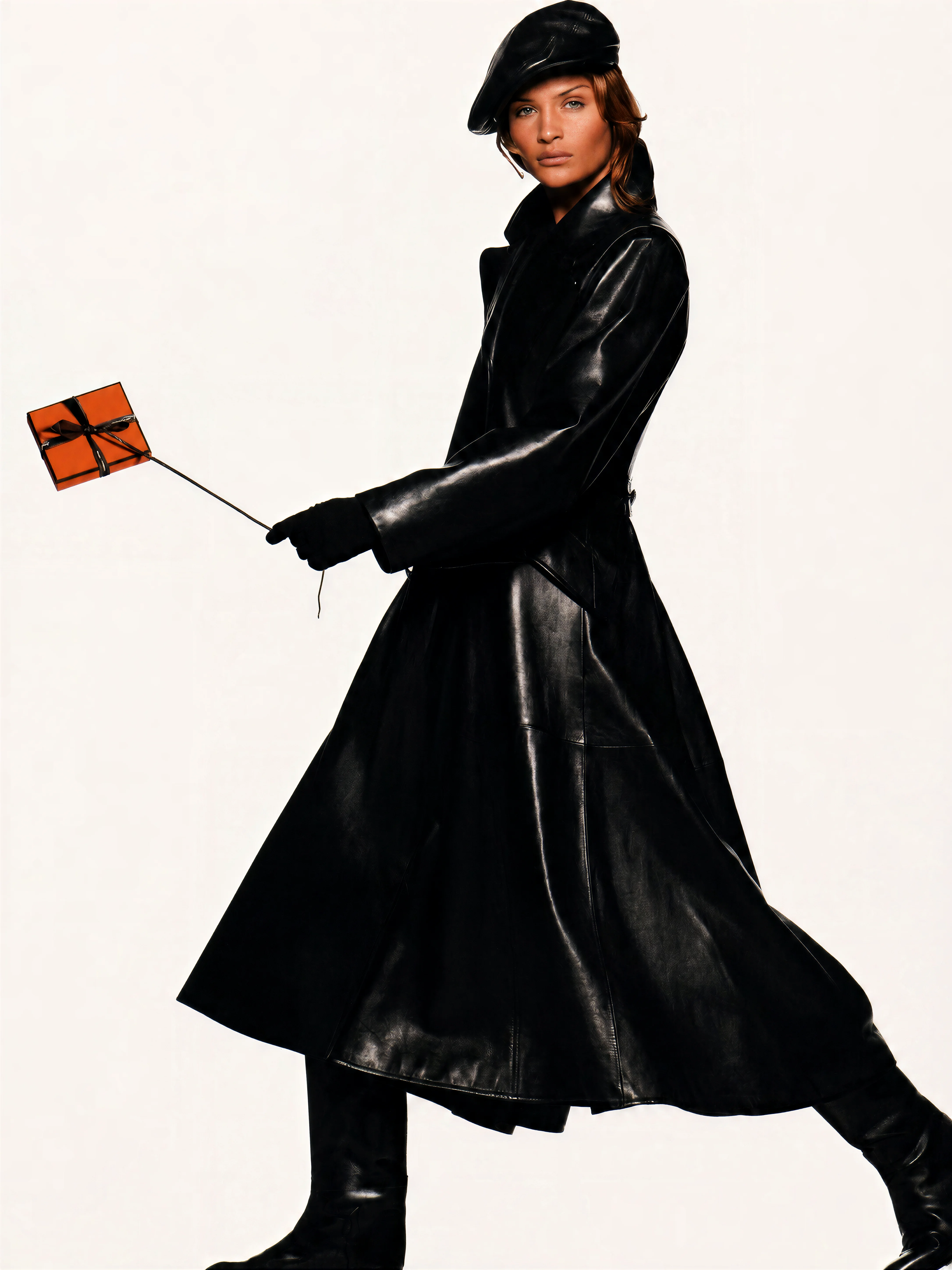
The staging repeats. She strides in a black leather trench and cap, and the box has been flown out on a long string rather than carried, the one hot spot of colour in an otherwise entirely black frame.
Set that beside the country reading it. British average weekly earnings that September were £237.20, a bit over a thousand pounds a month before anything came out of it, in the autumn after sterling had been kicked out of the ERM. That is the only hard number available to a reader of these pages, because the campaign supplies none of its own. No price appears anywhere in it, and no product does either, since the box stays shut in every frame. You cannot work out what any of it costs from the evidence in front of you, which is a strange way to advertise and an extremely effective way to sell.
The box wasn't a house tradition anyone inherited. It became the advertising because an agency decided it should. Hermès has worked with Eldorado since the late 1970s, and Bruno Suter, one of the three who founded the shop in 1976, takes the credit flatly: "That was me. When I saw those things, the boxes, all so wrapped up, with the ribbons. I had that in mind." The brief was blunter still. Someone at the house told them not to talk about the scarf, on the grounds that it was the least fashionable thing on earth, so they didn't, and by the account of his partner Pacha Bensimon sales skyrocketed the following Christmas. Suter says the house went on to print a scarf with the ribbon and the box on it, packaging eating its own contents.
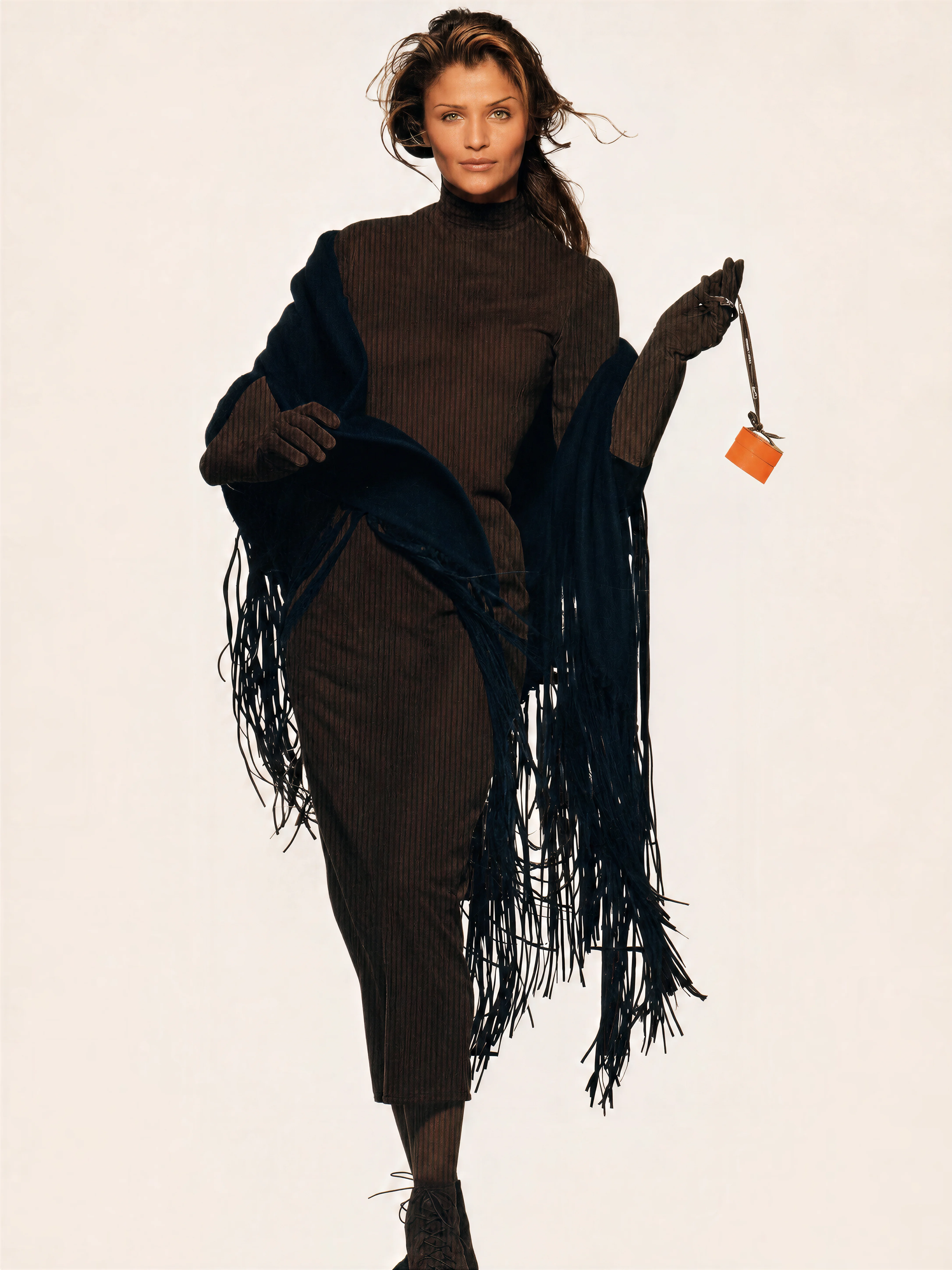
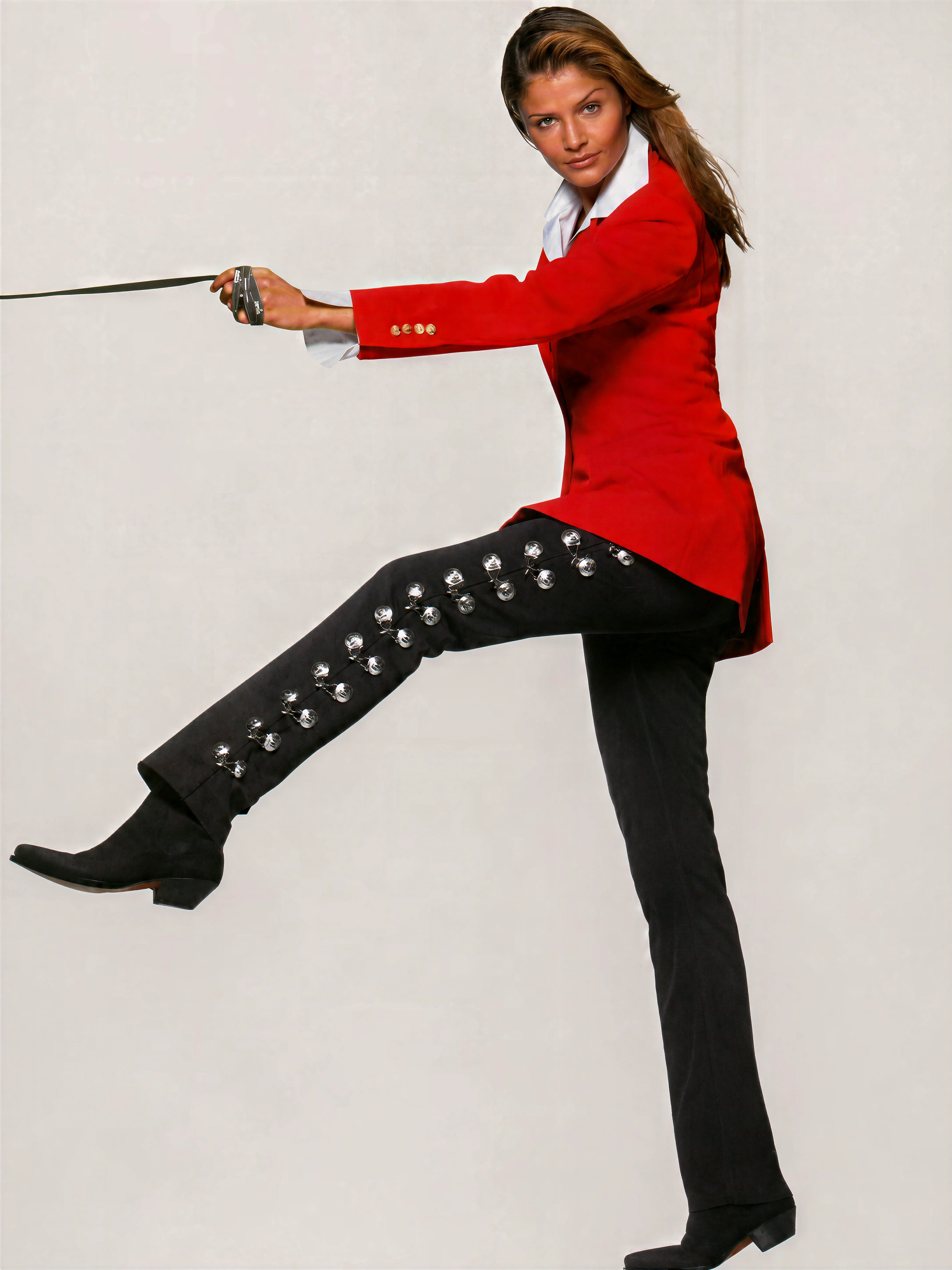
The rest of the campaign reads differently once you know that. One box dangles from a gloved hand while she stands under a navy shawl fringed to the knee. In the red riding jacket and silver-buttoned suede trousers there's no box at all, only a leather strap pulled taut towards a horse you're expected to supply yourself. The page loses nothing by dropping the object.
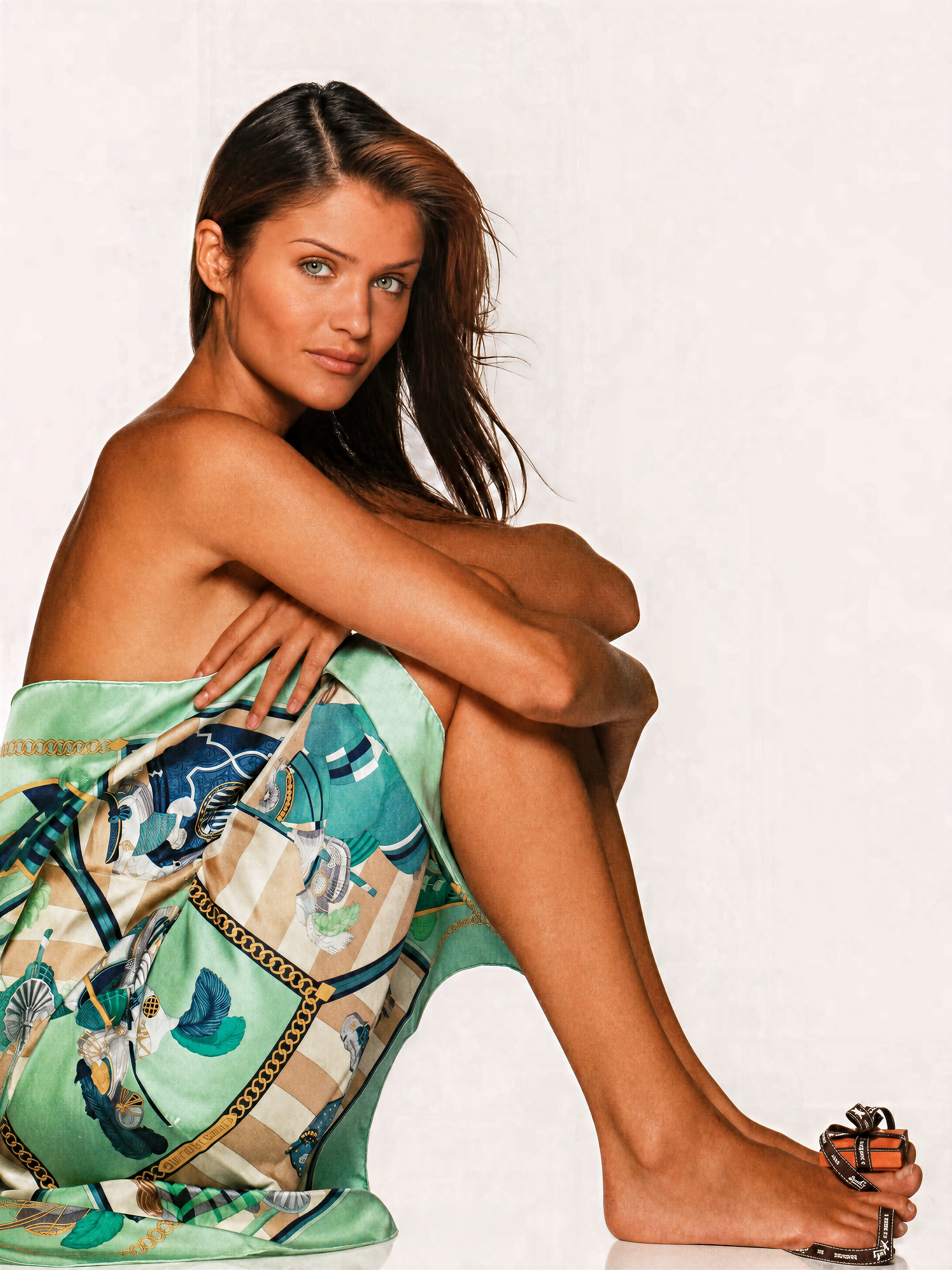
The last is the one I'd keep. She sits wrapped in a green silk carré, chin turned, and the box has been demoted to the floor where a bare foot could nudge it, still tied, still unopened. Three years earlier the house had Linda Evangelista cupping one on a floor in Vogue like something precious, and by 1993 it's litter. The gap between that orange square and a thousand pounds a month is real enough, but it isn't old money looking down from a great height. It's a piece of graphic design some people in Paris invoiced for in the 1970s, and it worked so well that the wrapping outgrew whatever it was supposed to wrap.
Sources:
-
Campaign: Hermès FW 1993 — Scanned Fashion World
-
Portfolio: Bill King for Hermès — System Magazine
-
AWE: Whole Economy Historic Level (£), Non Seasonally Adjusted — Office for National Statistics
Filed under Hermès · Helena Christensen
This post is timestamped using Blockchain technology. Verify