Escada Kept Drawing Carriages
Margaretha Ley's first success was a small horse and carriage embroidered on a sweater. She put it in a shop window and it sold. The needlework came from her training as a seamstress at the Swedish royal court's tailor in Stockholm, and she named the house after a racehorse that had impressed her. By the early 1990s that one motif had become an entire heraldic vocabulary, printed across silk as state coaches and palace gates flanked by guardsmen, worn over tartan with gold chain belts.
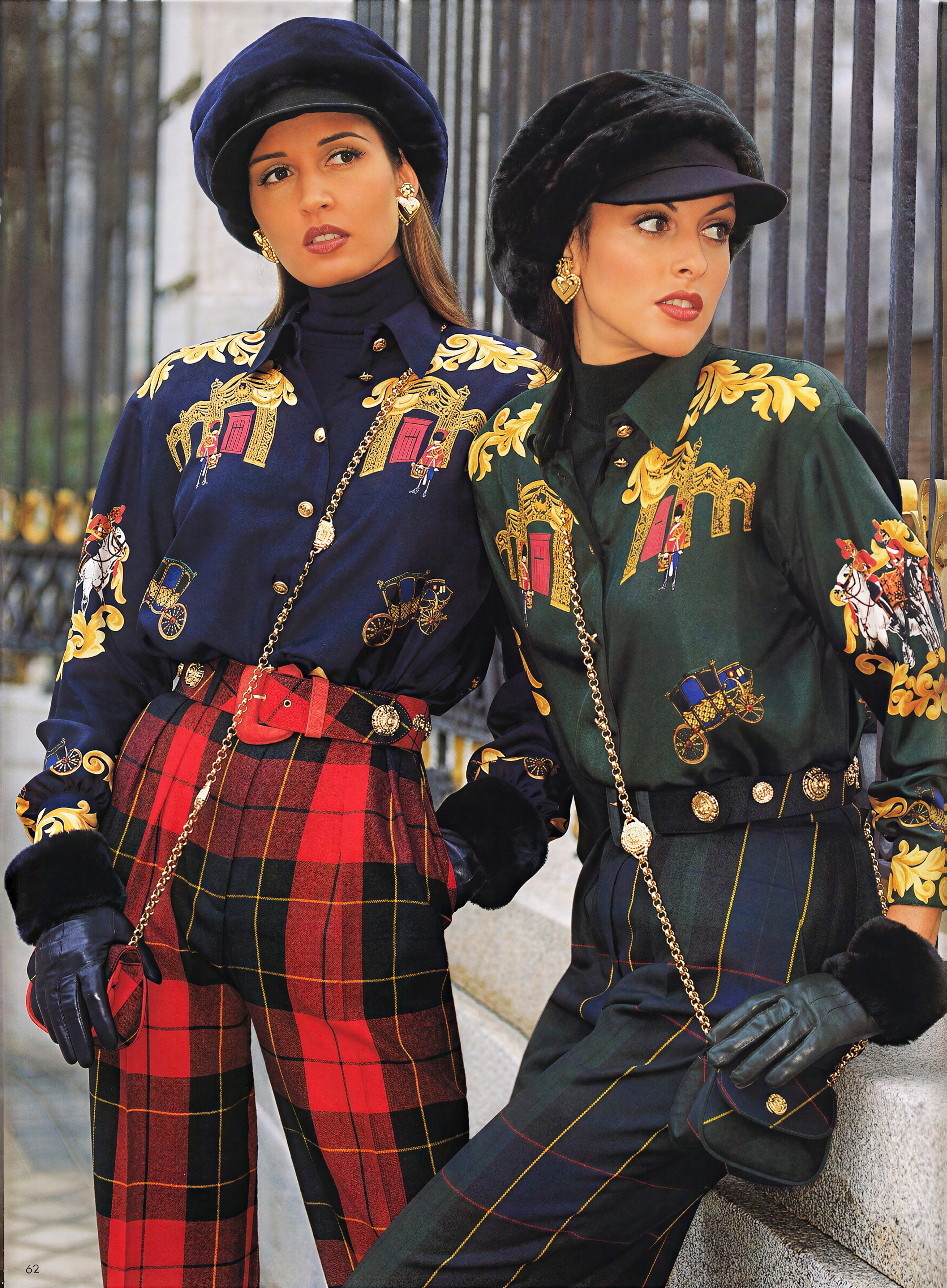
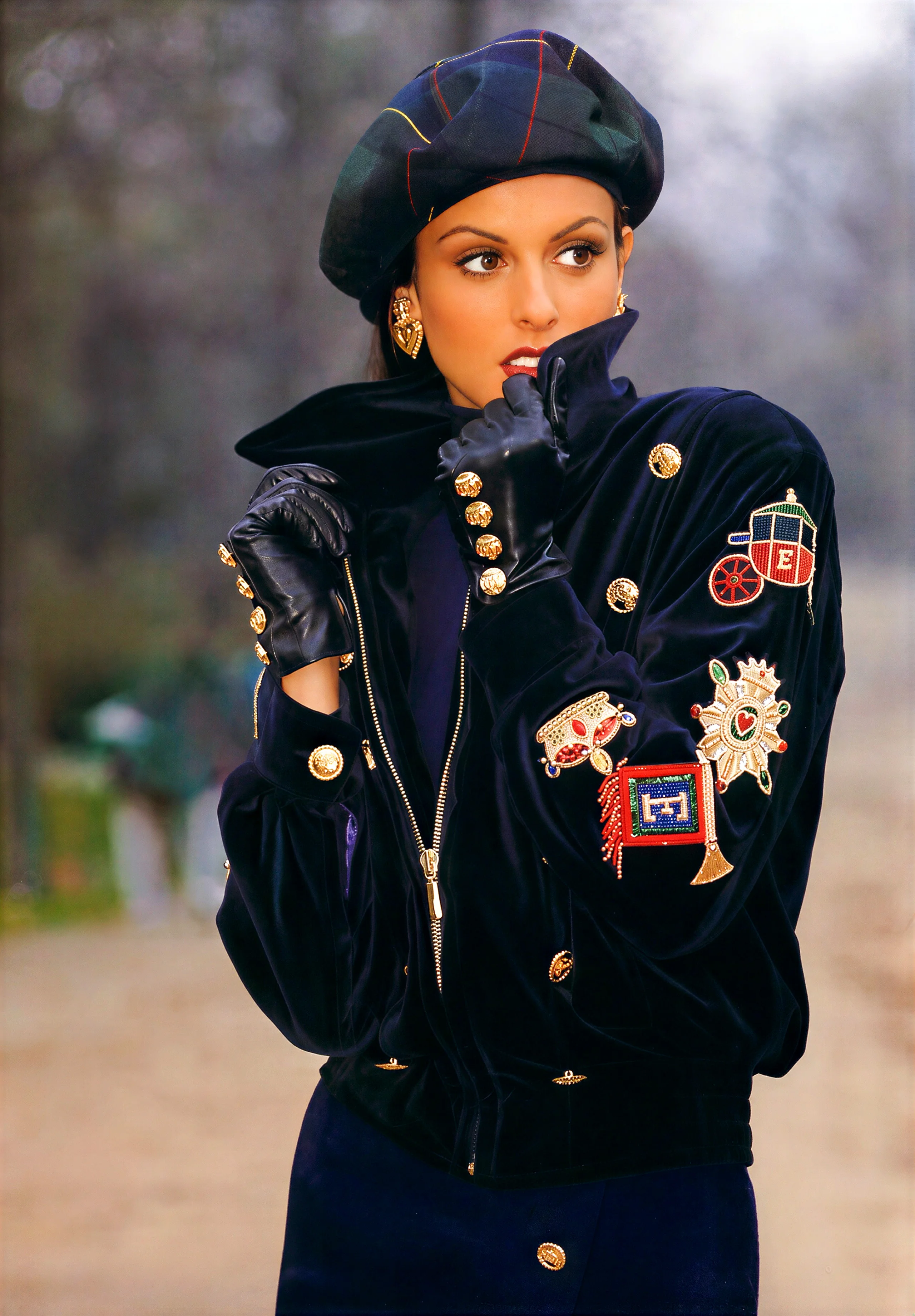
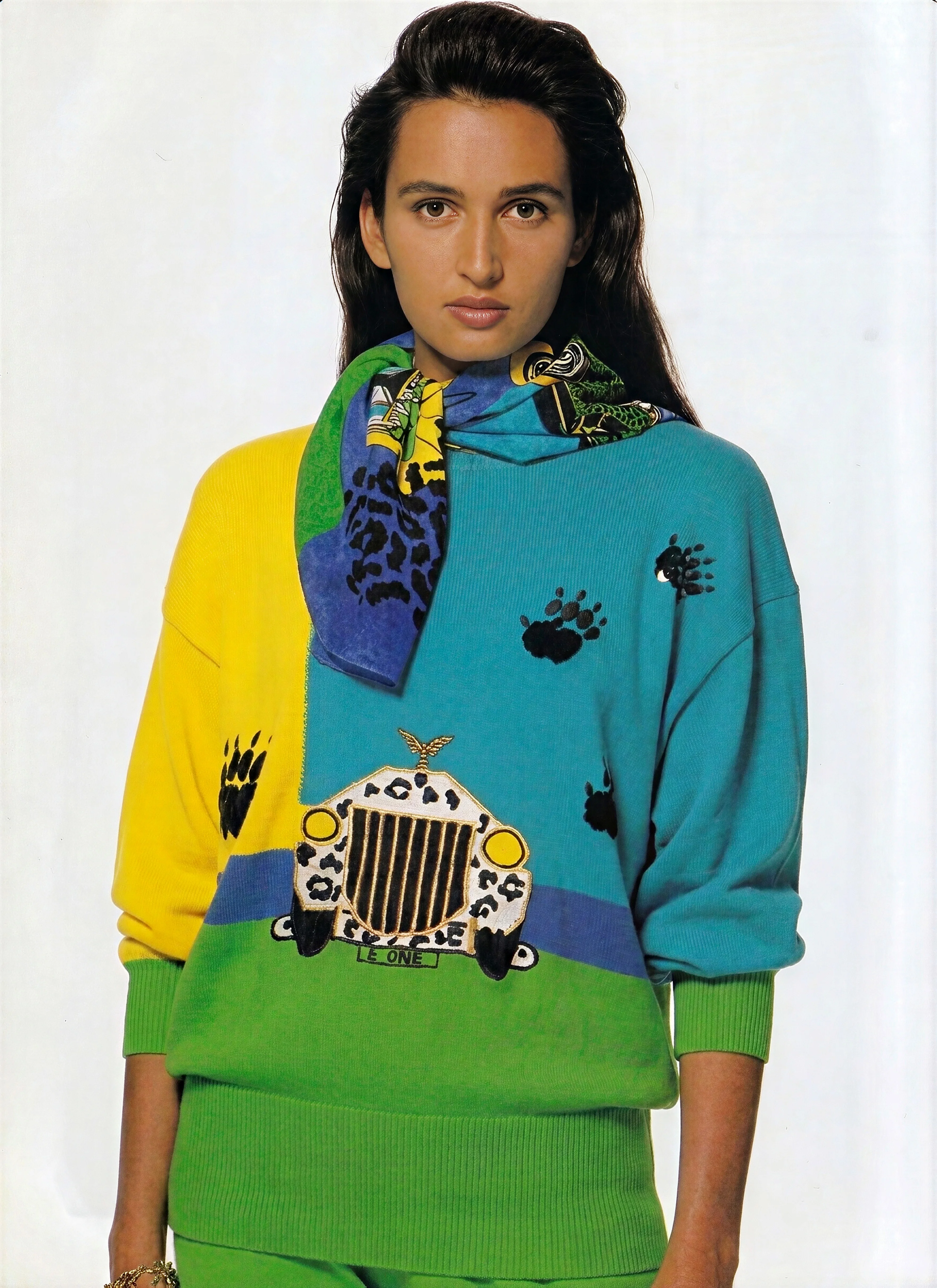
The same coach reappears in seed beads on a navy velvet bomber, alongside a crown and a jewelled star, and once more as a Rolls-Royce grille stitched onto turquoise knit with black paw prints walking over the shoulder. "Hearts and stars and animals and flowers, these are things I always like to play with," Ley told the Chicago Tribune in 1989. The motif from that first shop window was still running through the house's pages more than a decade on.
The garments went in the most complete way available. Look at the shoulder on the magenta wool jacket, built out past the arm on a pad wide enough to stand a glass on, or the sleeve on the sweater-dress in the same abstract print, dropped so low it turns the body into a bell. Those proportions have no route back, and the ornament went with them.
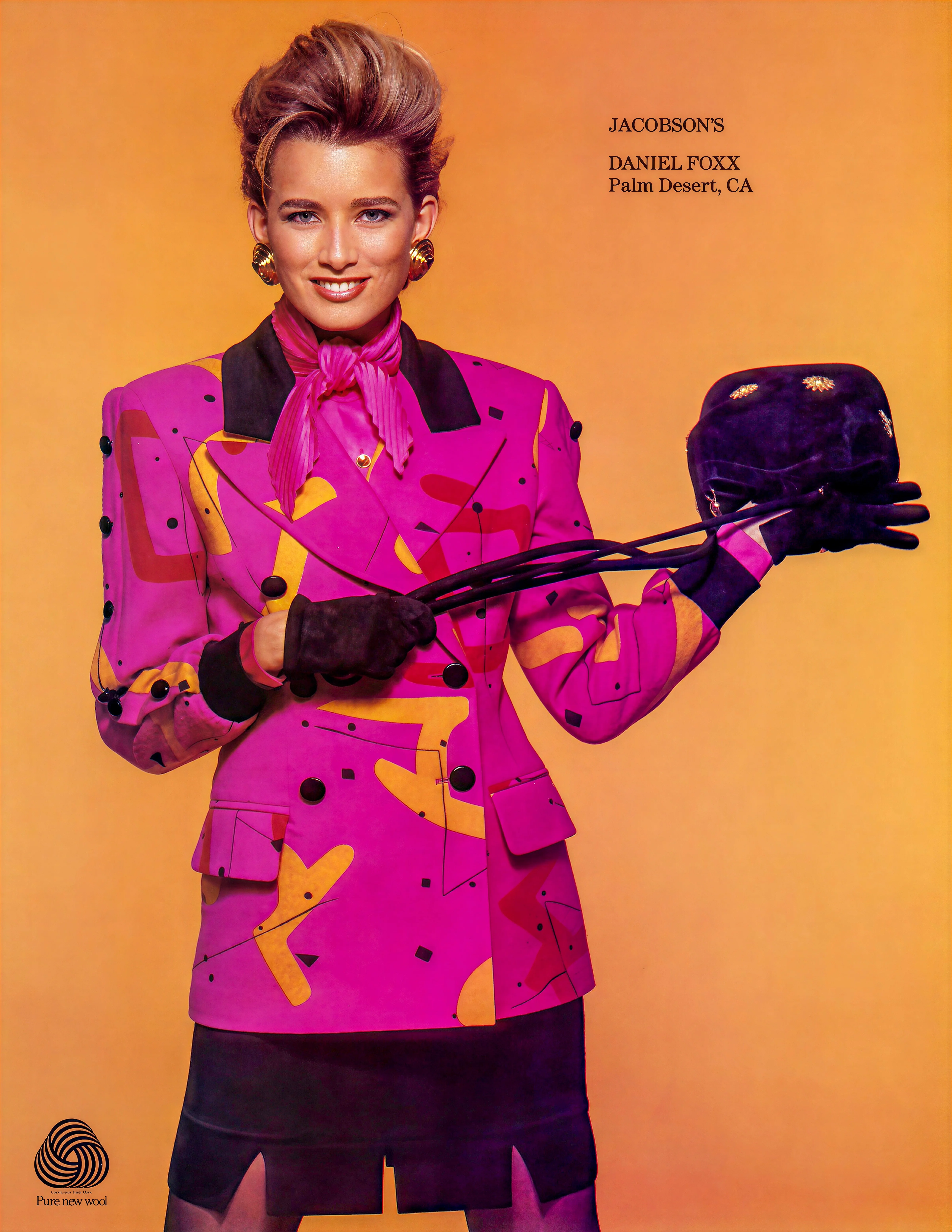
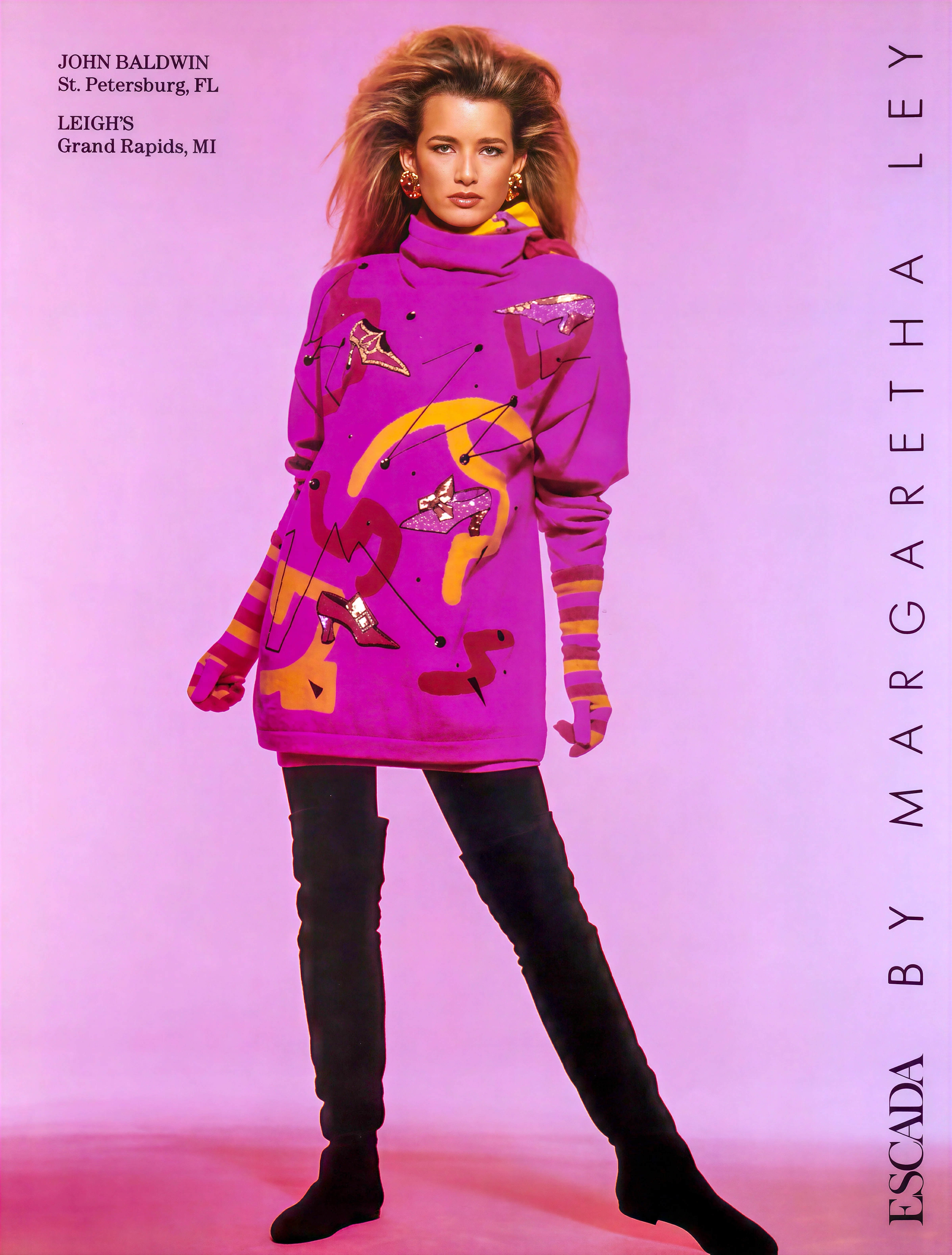
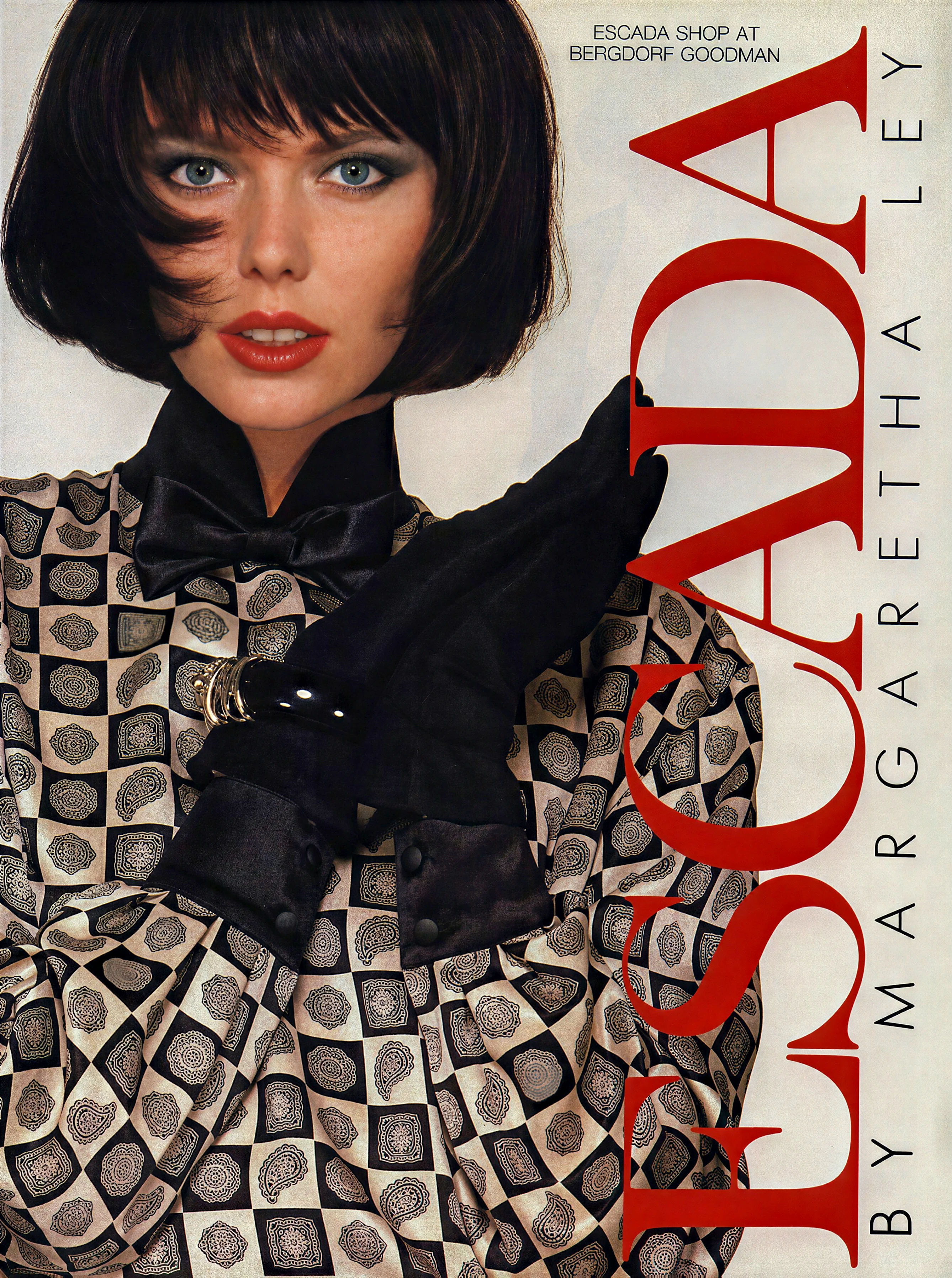
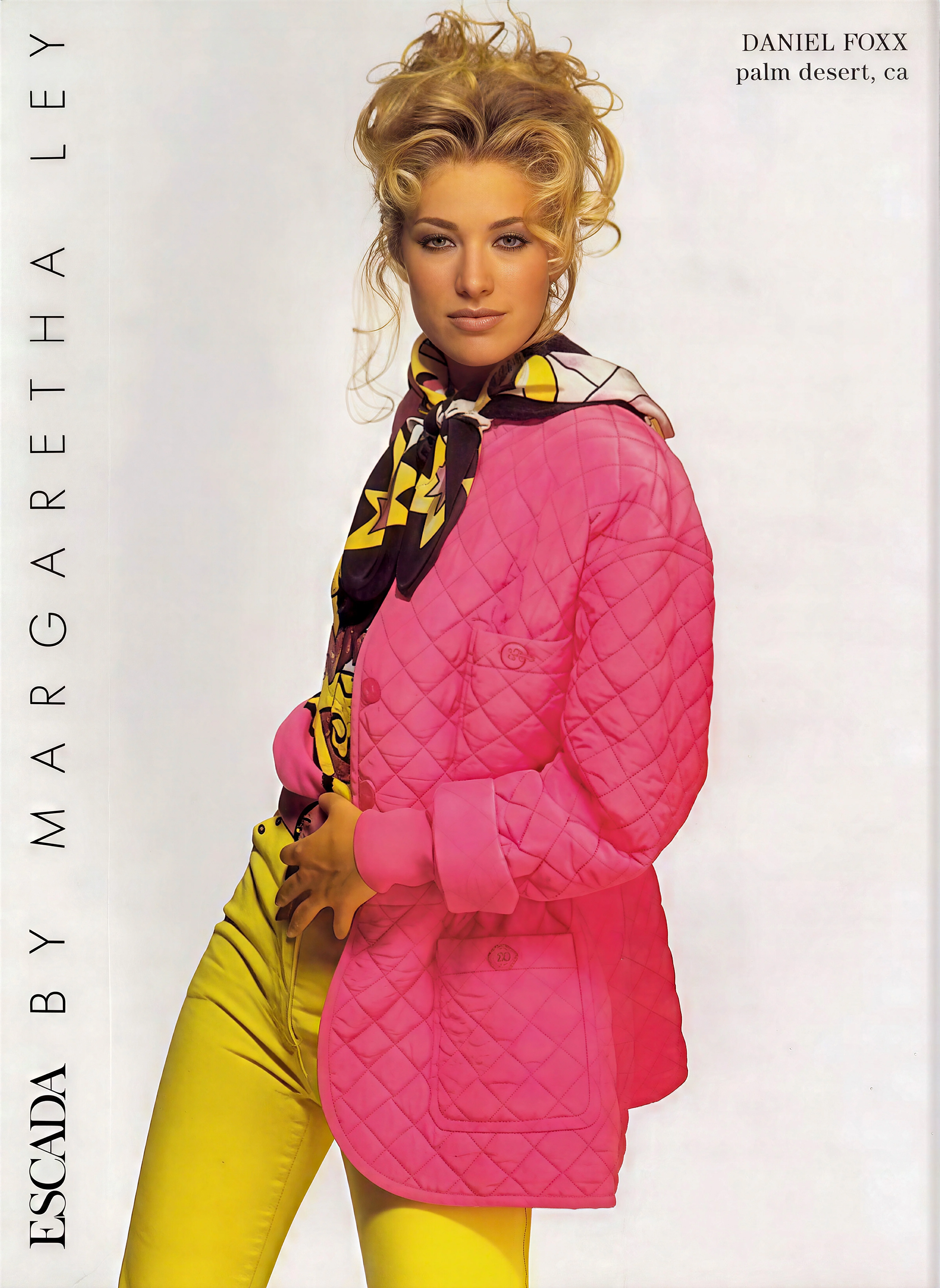
The women are a different matter, though not because they look modern. The styling dates them to the month: lacquered volume in the hair, gold button earrings, a lip drawn hard at the edge. What refuses to date is the address. The bob and the red mouth at Bergdorf Goodman meets the lens with a composure that current fashion photography has largely stopped asking for, and the woman in the pink quilted jacket holds the same line with yellow trousers arguing against her. None of them is credited. The advertisements name Daniel Foxx of Palm Desert, Jacobson's, Leigh's of Grand Rapids, so the shops get a byline and the women get nothing. A named model ages alongside her career, the way Tatjana Patitz does in the 1991 campaigns. These faces were never attached to a biography that could run on without them.
Ley died in 1992. The line had already passed 1,200 pieces by the early nineties, taking in jewellery, handbags, gloves, scarves and shoes, so what Michael Stolzenburg held until 1994 and Todd Oldham took on the following year was a full inventory of codes to be kept up by people who had inherited them rather than meant them. The pages themselves sell inheritance hardest of all. Crests, state coaches, royal-court needlework, a Woolmark tag in the corner reading pure new wool: every signal insists this is the thing you hand on. The clothes went to the charity shops and the archive resellers. The face above the collar came through untouched.
Sources:
-
Behind the Seams — Chicago Tribune
-
Escada — Encyclopedia.com
-
Escada AG — Encyclopedia.com
-
Escada — Wikipedia
Filed under Hauntology & the uncanny · Escada
This post is timestamped using Blockchain technology. Verify