Escada and the Weight of 1989
Escada knitwear from the late 1980s has a particular density to it — not just in the fabric, which was heavy and substantial in a way that fast fashion has since abandoned, but in the sheer volume of design decisions packed into a single garment. Floral appliqué, colour blocks, contrasting collars, embroidered roses sitting next to geometric patches of hot pink and yellow. Every surface covered. No breathing room.
It looked expensive then. It was expensive. Escada under Margaretha Ley traded on a specific kind of European maximalism that read as affluent and cosmopolitan in its moment. The gold earrings, the structured shoulders, the saturated palette — all of it signalled a confidence that only money could buy. That confidence is still visible in the knitwear, frozen in place like a time capsule nobody asked to open.
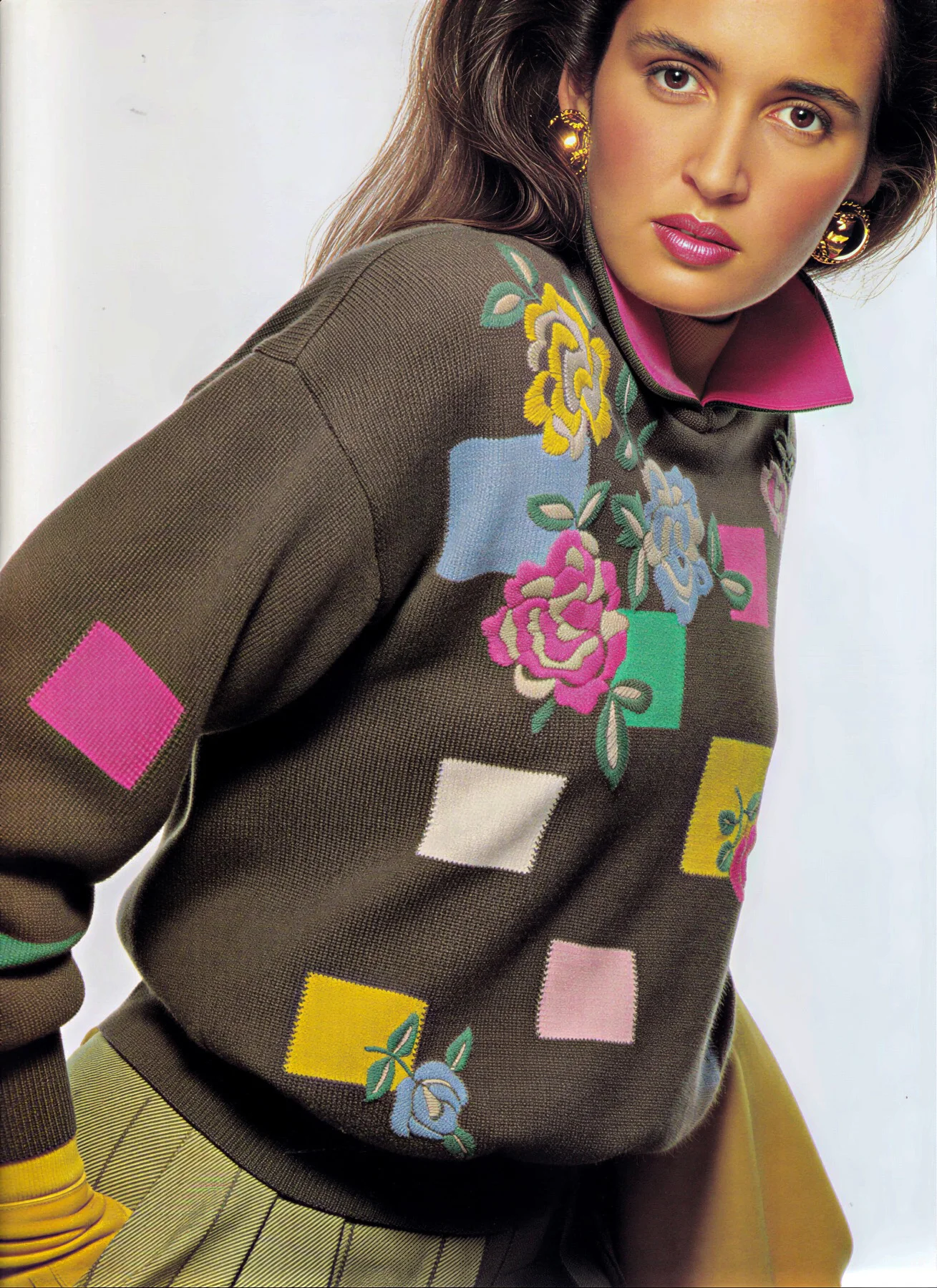
Viewed now, the aesthetic sits somewhere between ambitious and overwhelming. The colour combinations that felt luxurious in 1989 register as cluttered today. Minimalism won. Quietly, decisively, and probably permanently. The current fashion vocabulary has so little tolerance for this kind of ornamental excess that the garments look almost archaeological — artefacts from a civilisation with different rules about how much was enough. I'm not sure they were wrong. But the distance is real.
Filed under Escada
This post is timestamped using Blockchain technology. Verify