A Touch of Lycra
A wind machine, a grey studio gradient, and one arm thrown up into her own hair: the Mary Jane Marcasiano page in American Vogue for October 1989 spends everything it has on a knit in motion. The top is taupe jersey with dolman sleeves cut so deep they read as a cape until you find the wrist, gathered into a wrapped band at the waist, and below that a dark column skirt splits to the thigh. Nothing is pinned, boned or structured. The garment does its shaping by stretching, and the picture exists to prove it.
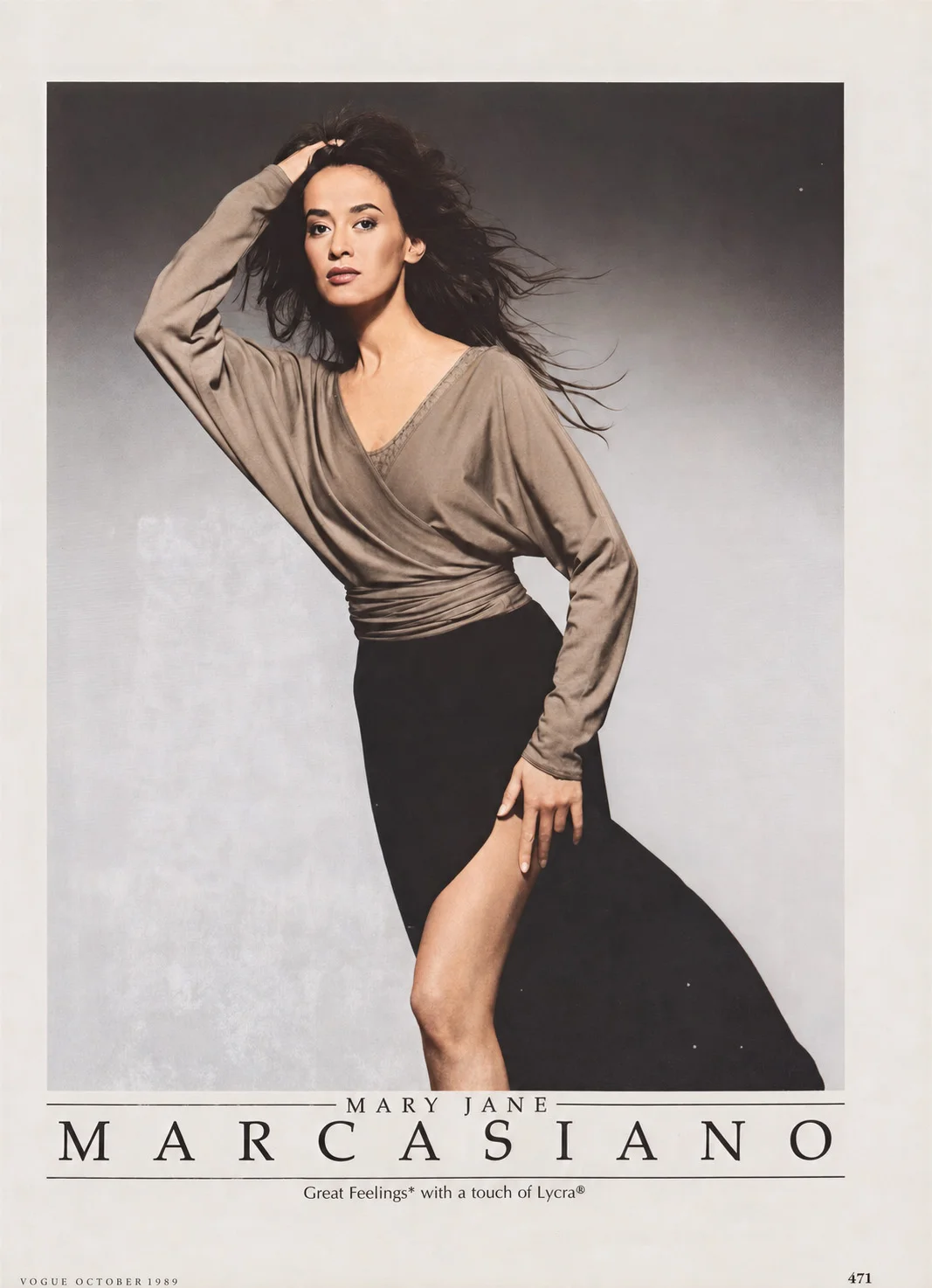
Marcasiano ran a sweater-knit business out of SoHo on a single idea: blend Lycra into traditional knits and let the fabric take over the structural work from the pattern cutting. Her own pitch for it was clothes a woman could wear morning to evening, cold to warm, sexy to serious, which is showroom language, though this page does make the case. Liza Bruce would build entire daywear collections on the same principle a few years later, swimwear engineering moved into the city. What separates the two is material rather than method. Bruce worked in swim jersey; Marcasiano worked in rayon, cotton, silk and linen.
She had come out of Parsons and set up alone while barely into her twenties, in SoHo rather than on Seventh Avenue, showing her first collection in an art gallery. (The founding year is a mess. Her own site says 1977, the reference books say 1979 or 1980, and a 1986 interview has her starting at 23.) Awards came fast, four of them inside four years, and one matters more than the rest here: in 1984 DuPont named her its most promising designer.
Lycra was DuPont's. Five years on, the line under her logo reads "Great Feelings* with a touch of Lycra®", asterisk and registered mark intact, and neither of those marks belongs to her. A fibre producer that backs a young knitwear designer in 1984 and then appears inside her advertising in 1989 isn't a coincidence, it's a relationship, and the ® is the receipt. Who paid for what, I can't tell from the page. Co-op arrangements like this normally split the cost, the fibre brand buying visibility it has no other route to, because nobody photographs a yarn.
The page number is telling in its own right. 471 puts her deep in the back of the fat October issue, well past the editorial well, in the territory where an independent house could still put itself in front of a national readership without a conglomerate behind it. The trade press had sized her company at a million dollars in volume three years earlier, which makes it a real business and a small one at the same time.
What happened after, I only know in outline. Hampshire Designs bought the business in 1995, Marisa Christina took the label in 1998, and Marcasiano moved into costume work for dance companies, which is where she has been since. Whether those sales were a rescue or a cash-out, the sources don't say.
Sources:
-
Mary Jane Marcasiano — Wikipedia
-
Marcasiano, Mary Jane — Contemporary Fashion, via Encyclopedia.com
-
Crafted Knitwear: Hot Young Designer Weaves a Study of Easy Luxury — The Morning Call, 19 October 1986
Filed under Mary Jane Marcasiano
This post is timestamped using Blockchain technology. Verify