Bowen West Theatre
I appeared as the lead in Serious Money by Caryl Churchill at the Bowen West Theatre in Bedford on the evenings of 29 and 30 November 1990. At the time, it felt immediate rather than significant. Rehearsals, performances, conversations in corridors and bars afterwards — it was all lived in the present tense. What I could not have known was that this was a pre-internet moment, one of the last times in my life when experiences were allowed to happen fully and then disappear without trace.
The play itself was only part of what occurred. During rehearsals and performances I met many girls — not in any dramatic or cinematic sense, but in the ordinary, charged way that proximity creates. Faces, gestures, brief intimacies, conversations that went nowhere but still mattered. None of this was recorded. None of it circulated. When it ended, it ended completely. What remains now are faces without names, impressions without continuity. Recognition without access. That kind of memory does not fade; it lingers, unresolved.
Over time, the memory of those nights has grown heavier than the original experience ever was. Not because the performances were exceptional, but because they have come to carry far more than they were meant to. The Bowen West Theatre has since been demolished and replaced with residential flats. The physical space that once held those evenings no longer exists. There is no digital residue to soften the loss — no footage, no archive, no searchable proof that it happened. The memory exists entirely outside technology, and because of that it feels both vivid and unstable.
This is how a memory comes to outweigh its original occurrence. It absorbs the disappearance of place, the loss of social density, and the knowledge that the conditions that produced it cannot be recreated. The memory acquires a kind of autonomy. It no longer belongs to November 1990 alone; it intrudes into the present, shaping how later life is perceived. What followed feels thinner by comparison, more constrained. In that sense, the memory has not merely survived — it has come to delineate, and at times debilitate, my life.
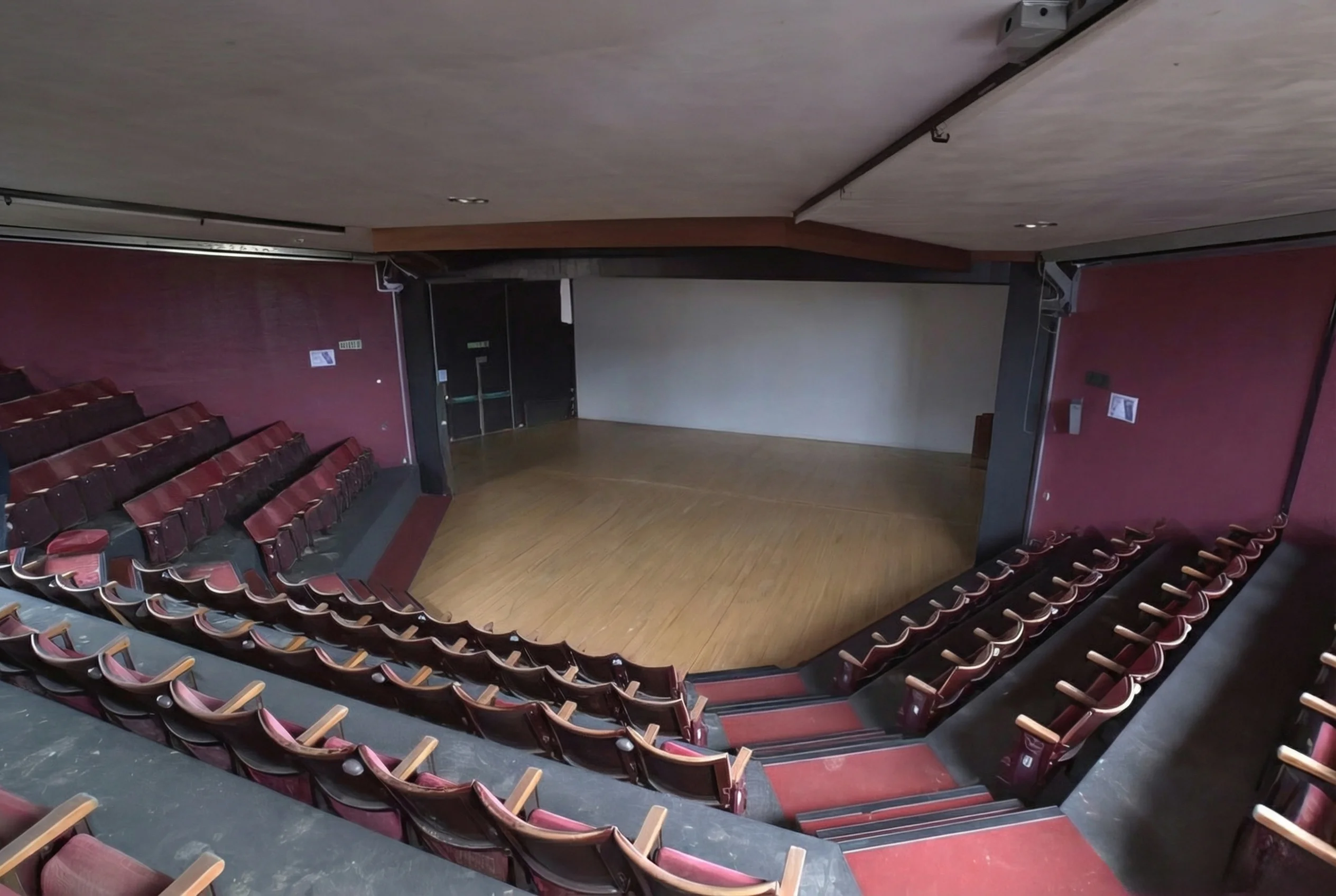
There is also something particularly haunting about remembering people rather than events. Buildings can be demolished and named as lost. Years can be closed off. But people vanish quietly. Those faces remain suspended in time, untouched by aging or outcome, standing in for a moment when connection felt abundant and unforced. They represent not relationships that ended, but possibilities that never had the chance to become anything at all.
In a post-internet world, moments rarely end. They persist as images, fragments, and references, endlessly retrievable. But this did not. It belonged to a world that assumed finitude — that allowed things to happen, matter deeply, and then disappear. That is what gives it its weight now. Time has moved on without hesitation, but the memory remains disproportionate, heavy not because it was perfect, but because it was fully lived and unrecoverable.
Filed under Hauntology & the uncanny
This post is timestamped using Blockchain technology. Verify