Career Clothes for Metropolitan Women
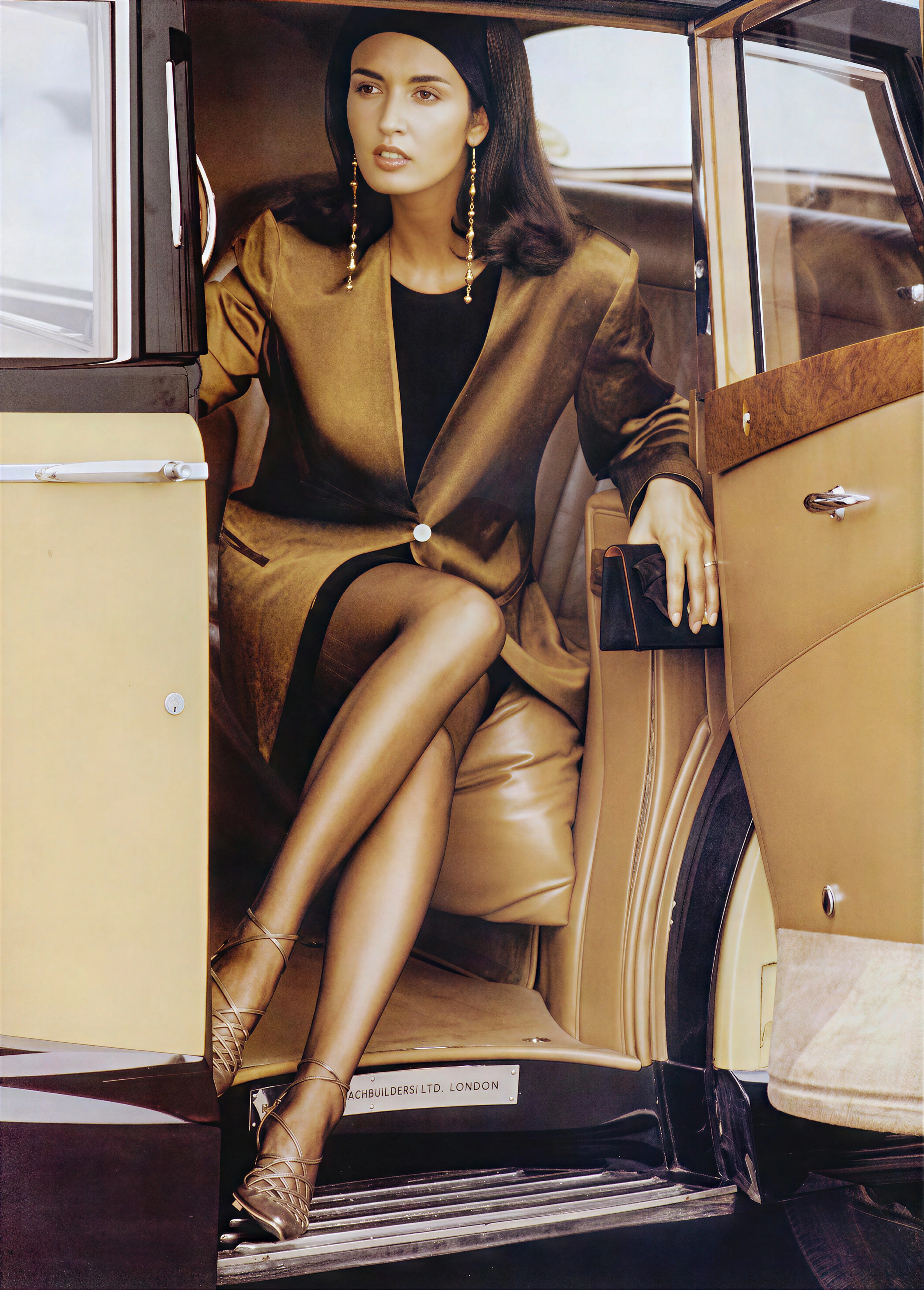
A woman is halfway out of a chauffeured car, one metallic sandal already on the running board, the other foot still inside. She isn't arriving or leaving so much as holding the pause between the two, which is the whole mood of this Episode advertisement from American Vogue, November 1990. The bronze jacket has real structure, almost lacquered in the light; the black dress under it is plain to the point of severity. Long earrings, sheer tights, a slim clutch held against the door. The ad is selling clothes, but the thing it actually trades on is composure: the idea that a certain kind of woman moves through the city sealed off, unhurried, expensively calm.
Episode is mostly forgotten now, which makes the confidence of the page easy to misread. It wasn't a minor careerwear label. The brand was the flagship of Toppy, the retail business the Fang brothers built out of the family's Hong Kong knitwear manufacturing. The Fangs had spent years as the sole sweater maker for Liz Claiborne and absorbed that company's instinct for dressing working women, then went looking for a customer of their own. In Britain they aimed squarely at the gap between Marks & Spencer and the designer floors. In America they took over a chain of stores and pushed it north, away from the sun belt and into the cities where women needed clothes for offices and appointments. The name itself came from a taxi ride up Sixth Avenue, the brothers comparing the weekly turnover of shop windows to the serial logic of Dynasty and Dallas.
So the Vogue placement wasn't a stretch. By 1990 the ad could list twenty-five stores across New York, Los Angeles, San Francisco, Chicago, Dallas, Boston, Washington and Miami, and the register it reached for was European tailoring with an explicitly international address. Not couture, but a long way above the high street. The clothes were silk, suiting, blouses, dresses, the professional separates of a woman who had somewhere to be and the means to look settled getting there.
The setting does most of the persuasion. A car interior photographs as a private chamber, a small salon that happens to move, and Vogue in this period knew exactly how to frame that. The white margins, the restrained type, the stillness that costs money to produce. It is the same promise Azzedine Alaïa's clients were buying from the other direction, the power-dressing argument about claiming space in rooms that had only recently begun to admit women, except Episode made it quieter and more bourgeois. No armour. Just poise rendered as a product you could order in a fitting room.
That is why the image feels stranded in its own decade. It believes, completely and without irony, in polish and discretion and adult authority, in the soft click of a car door and a driver idling at the kerb. None of it reads as aspirational the way it once did. What the page was really selling was a social dream about how a serious adult life should look from the outside, and the brand that sold it has since dissolved almost entirely. The dress survives in the photograph. The world it was dressed to walk into doesn't.
Sources:
-
The next Episode — South China Morning Post
This post is timestamped using Blockchain technology. Verify