Enys Men and the Horror of Routine
Mark Jenkin's Enys Men opens with a woman walking the same path, checking the same flowers, writing "no change" in the same notebook, day after day. The structure is so rigid it takes fifteen minutes before you realise the film is training you. Teaching you the rhythm so it can break it.
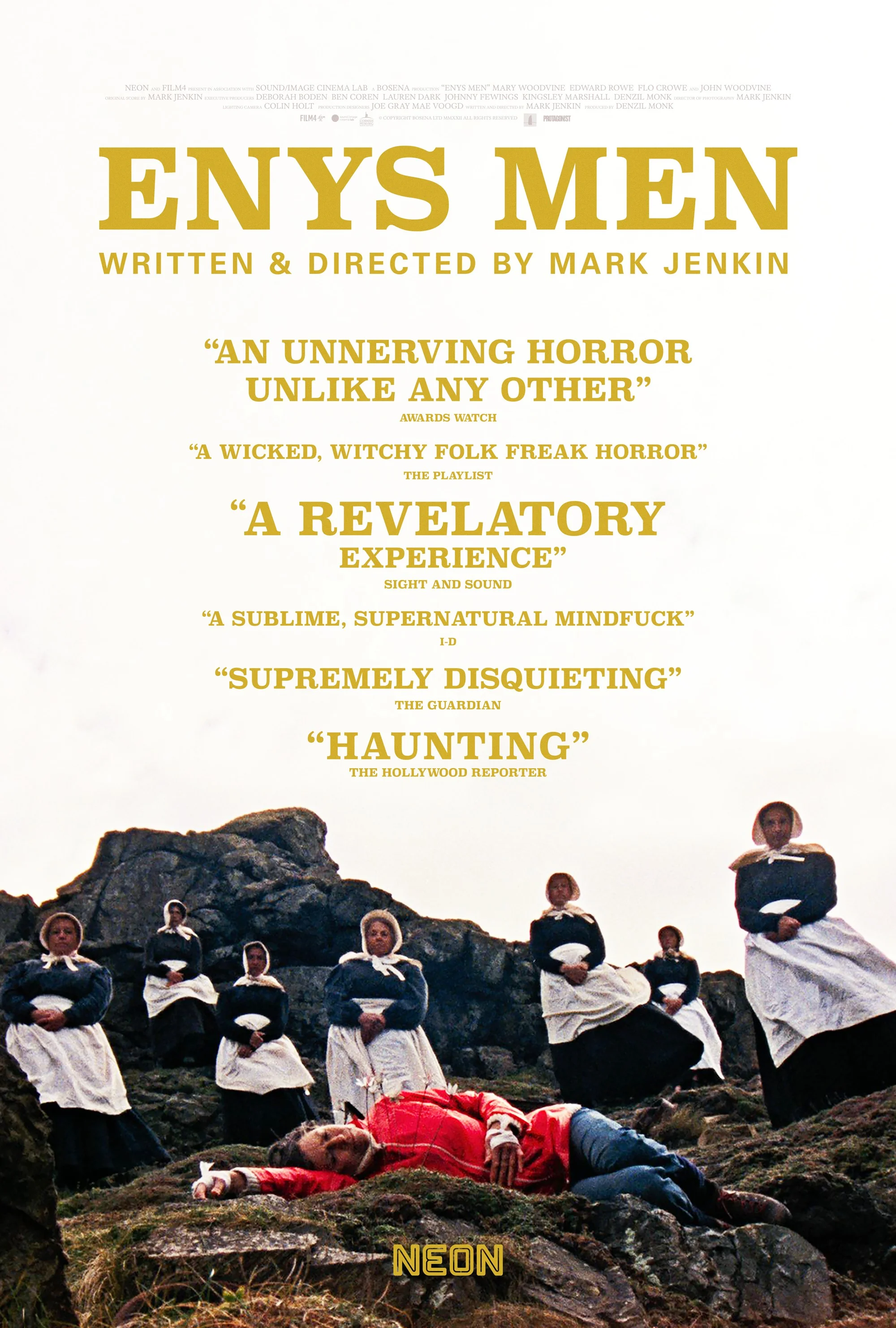
The setup is simple. A wildlife volunteer (Mary Woodvine, extraordinary in near-silence) lives alone on an island off the Cornish coast. It's 1973. She monitors a rare cliff-edge flower. She records her observations. She drinks tea, listens to static on the radio, sleeps. Then does it again. Jenkin shot it on his own clockwork Bolex, which can only record 27 seconds before needing to be wound again, and you feel that constraint in every cut. The edits are blunt. Image slams against image, a technique Jenkin traces back to Nicolas Roeg's Walkabout, and it works the same way here: not smooth, not comfortable, but alive with friction.
The folk horror references are obvious and deliberate. Children in white dresses carrying hawthorn branches, straight from The Wicker Man's May Day. Standing stones. Miners emerging from the earth like the dead rising. But Jenkin doesn't build toward a revelation the way genre convention demands. The temporal layers just accumulate. Past and present coexist on screen without hierarchy, without explanation, without the courtesy of a twist. The film's philosophical anchor is block universe theory, the idea that all moments exist simultaneously, and Jenkin commits to it structurally. There are no flashbacks because nothing is past.
The island swallows her in red and white and stone, and Jenkin's hand-processed 16mm bleeds colour until the landscape looks fevered. The Sight & Sound review described "sensorial immersion into the textures, shapes and colours of the place," and that's exactly right. This is not a film you follow so much as one you absorb.
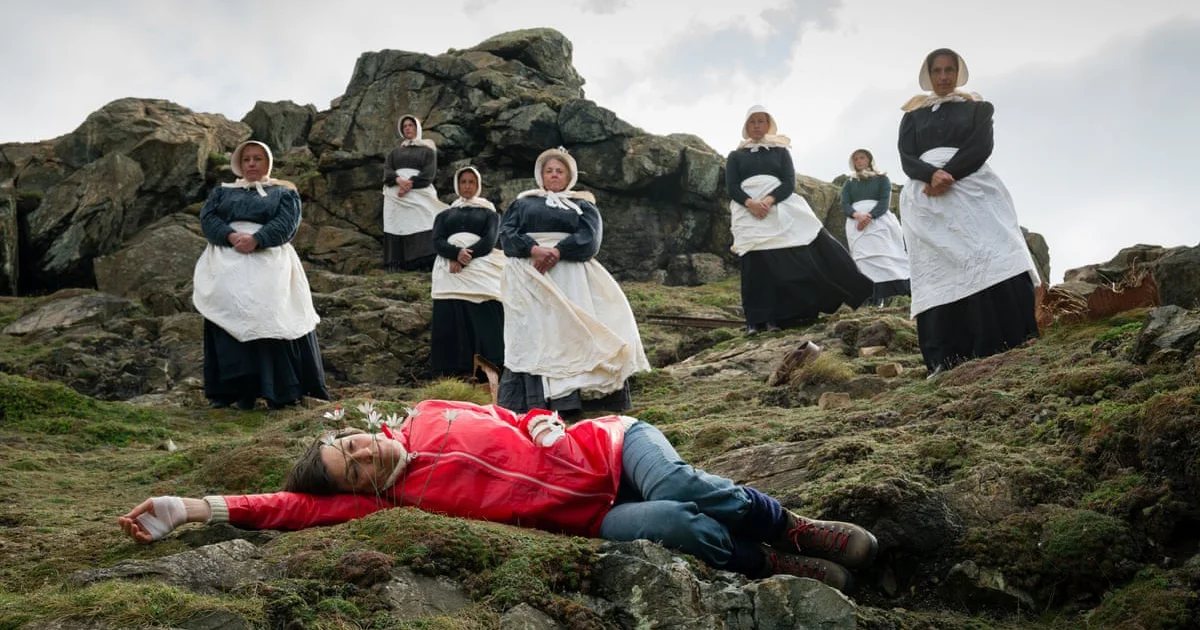
The critical split tells you everything. Eighty percent on Rotten Tomatoes, 5.6 on IMDb. Critics who value formal ambition loved it. Audiences expecting narrative resolution did not. I understand both reactions, but I think the dismissals miss what Jenkin is actually doing. The horror isn't what changes. It's that nothing does, until you can't trust your own ability to tell the difference.
Jenkin made this in 21 days during COVID lockdown, on an island, mostly alone. The enforced isolation mapped directly onto the film's premise. He wrote it, directed it, shot it, recorded the sound in post, composed the score, and edited it himself. That level of singular authorship shows. For better or worse, there is nobody else's sensibility in the frame. It reminded me of how hauntological music works: the texture carries the meaning that narrative refuses to.
Sources:
-
Island of Lost Souls: Mark Jenkin on Enys Men — Sight & Sound
-
Enys Men review — Sight & Sound
-
Mark Jenkin's Enys Men: Cornish Folk Horror — Horror Homeroom
Filed under Film & TV · Hauntology & the uncanny
This post is timestamped using Blockchain technology. Verify