The War Outside the Frame
The Gulf War was two weeks old when this hit newsstands. Operation Desert Storm had launched on January 17th, the nightly news was all missile footage, and American Vogue's February 1991 number opened to Patrick Demarchelier photographing Karen Mulder and Elaine Irwin as though none of it was happening.
That disconnect wasn't accidental. Anna Wintour had been editor-in-chief for three years, and her Vogue didn't acknowledge the world outside the frame unless the world outside the frame was wearing something worth photographing. Claudia Schiffer got the cover — twenty years old, a year into her Chanel contract, blonde in a way that made you forget other hair colours existed. Inside, Carlyne Cerf de Dudzeele styled the Demarchelier editorial with the chromatic confidence that was already becoming her signature. She hated minimalism before minimalism had properly arrived. Dressed images the way other people decorated cakes — too much colour, absolute conviction, zero apology.
Oribe did the hair. This was peak Oribe — before the product line, when his name on a credit sheet meant volume and movement and a kind of engineered glamour that looked effortless from ten feet and technically impossible from two. Marie-Josée Lafontaine handled makeup. Between them, the credits beneath Demarchelier's name represented a team that could make anyone look extraordinary. That Mulder and Irwin already were extraordinary — or were about to become so — was almost incidental.
Mulder was twenty. Within the year she'd land her first Vogue cover, a Guess contract, and the kind of ubiquity that made "supermodel" feel like a word coined for her specifically. Irwin was twenty-one, already embedded in Ralph Lauren campaigns and months away from meeting John Mellencamp on a music video set — an encounter that would eventually pull her out of fashion's orbit entirely. Neither knew any of this yet. In February 1991 they were two models on location with good light and a photographer who understood that the best fashion images work by implying a life happening just beyond the crop marks.
Karen Mulder and Elaine Irwin, February 1991
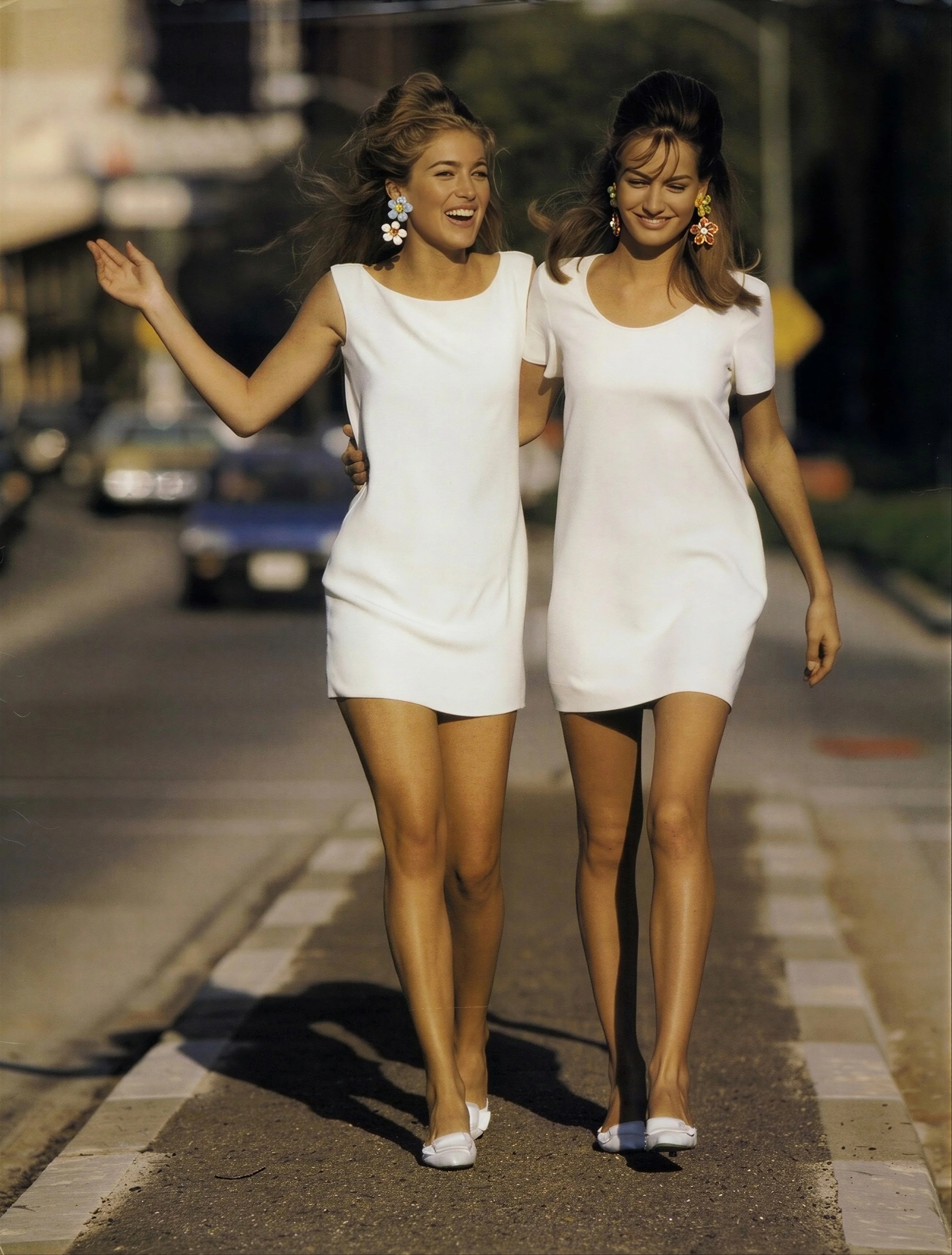
Demarchelier had that gift. His pictures never felt staged, even when they obviously were. He lit faces the way Golden Age cinematographers lit their leading ladies — soft, directional, warm enough to suggest intimacy without the mess of actual closeness. The distance between his work and Meisel's conceptual provocations wasn't only aesthetic. It was temperamental. Demarchelier believed beauty was a sufficient subject. Meisel believed beauty needed irony around it to survive.
I found this editorial while digitising a stack of old magazines, and the light stopped me. Not the clothes — fashion from 1991 is simultaneously dated and about to come back around, the way fashion always is. The light. It hasn't aged because it was never trying to be contemporary. It was trying to make two women look like the best versions of themselves in a world that represented an escape from the brutality of the nightly news.
The war ended weeks after this issue published. The economy took another two years to find its feet. Mulder's career peaked and then unravelled in ways nobody predicted. Irwin married a rock star and raised a family. Oribe died in 2018. And this image — two women, soft light, a February that history forgot — sits exactly where they left it, unaware that everything around it moved.
Filed under Elaine Irwin
This post is timestamped using Blockchain technology. Verify