Reading reviews on the Extrait De Parfum editions that were released a few months ago.
Daniel Lopatin - Marty Supreme
This album reminds me of the comments once made by the film director, Bobby Roth on using Tangerine Dream to score a movie about golf.
Bobby Roth in 1991:
I'd done two films with TD prior to Dead Solid Perfect and I've done two more since. I chose them for a 'Dan Jenkins' working-class comedy about golf precisely because of how strange it seemed.
I tried both American blues and country and western songs with the rough cut but both seemed too much in keeping with the existing images. Neither lifted the film to a new place or transformed it with counterpoint. Choosing a German band known for electronic music seemed bizarre to the film's producers, but when they heard the score they loved it as I did. It made golf more interesting and let people who were adverse to the game see it with new eyes. Ask any hard and fast golfer about the film and they'll say the music is perfect (though it's certainly not music one would associate with the game under traditional circumstances). Ironically, of the five films I've done with Tangerine Dream, [...] the score for Dead Solid Perfect probably did the most for the movie.
Boomkat:
OPN's anachronistic soundtrack to Josh Safdie's Timothée Chalamet vehicle is a bedazzled synth-heavy celebration of influences he's been wearing on his sleeve since day one: Tangerine Dream, Jean-Michel Jarre, Ryuichi Sakamoto, Peter Gabriel and Philip Glass.
You might wonder why Lopatin decided to go back to the 1980s once again for this one when Safdie's film, a fictional biopic of Marty Reisman, is set in the 1950s. Well, Safdie was fascinated by table tennis as a kid in the 1980s and when he was brainstorming with Lopatin in the early stages of the process, was batting across names like New Order, Tears for Fears and Constance Demby - clearly inspirations that Lopatin was equally familiar with. So the project plays like an homage to their own teenage years, with nods to classic '80s film soundtracks and enough synthesized and sampled mallet sounds (that's gotta be a Fairlight CMI, right?) to make the ping-pong theme stand out whether you've peeped the movie itself or not.
Fans of Lopatin's earliest Oneohtrix Point Never records will be stoked; it's 'Russian Mind' upgraded, in many ways, with some of the composer's loftier influences (we can hear Morricone, Jarre, Vangelis and Glass quite clearly on the ambitious standout 'Holocaust Honey') realized properly now with a fitting budget. And although the 'Marty Supreme' soundtrack is confection next to this year's mind-altering 'Tranquilizer' set, it's undeniably enjoyable. If you enjoyed Lopatin's cues for 'Good Time' and 'Uncut Gems', this just takes it even further, proving that he's one of the most capable artists in the Hollywood ecosystem right now. If the 'Stranger Things' soundtrack has gone down in history as the Demogorgon of forced nostalgia, 'Marty Supreme' is fighting the good fight.
This post is timestamped using Blockchain technology. Verify
Decorations
Mostly have all the lights up now. If I had packed them away properly last year, I could have got things done in half the time.
Spent some time converting DSF files to FLAC to make listening a bit easier.
This post is timestamped using Blockchain technology. Verify
Melissa McKnight
Photographed for Marie Claire Japan, April 1987.

This post is timestamped using Blockchain technology. Verify
Bowen West Theatre
I appeared as the lead in Serious Money by Caryl Churchill at the Bowen West Theatre in Bedford on the evenings of 29 and 30 November 1990. At the time, it felt immediate rather than significant. Rehearsals, performances, conversations in corridors and bars afterwards — it was all lived in the present tense. What I could not have known was that this was a pre-internet moment, one of the last times in my life when experiences were allowed to happen fully and then disappear without trace.
The play itself was only part of what occurred. During rehearsals and performances I met many girls — not in any dramatic or cinematic sense, but in the ordinary, charged way that proximity creates. Faces, gestures, brief intimacies, conversations that went nowhere but still mattered. None of this was recorded. None of it circulated. When it ended, it ended completely. What remains now are faces without names, impressions without continuity. Recognition without access. That kind of memory does not fade; it lingers, unresolved.
Over time, the memory of those nights has grown heavier than the original experience ever was. Not because the performances were exceptional, but because they have come to carry far more than they were meant to. The Bowen West Theatre has since been demolished and replaced with residential flats. The physical space that once held those evenings no longer exists. There is no digital residue to soften the loss — no footage, no archive, no searchable proof that it happened. The memory exists entirely outside technology, and because of that it feels both vivid and unstable.
This is how a memory comes to outweigh its original occurrence. It absorbs the disappearance of place, the loss of social density, and the knowledge that the conditions that produced it cannot be recreated. The memory acquires a kind of autonomy. It no longer belongs to November 1990 alone; it intrudes into the present, shaping how later life is perceived. What followed feels thinner by comparison, more constrained. In that sense, the memory has not merely survived — it has come to delineate, and at times debilitate, my life.
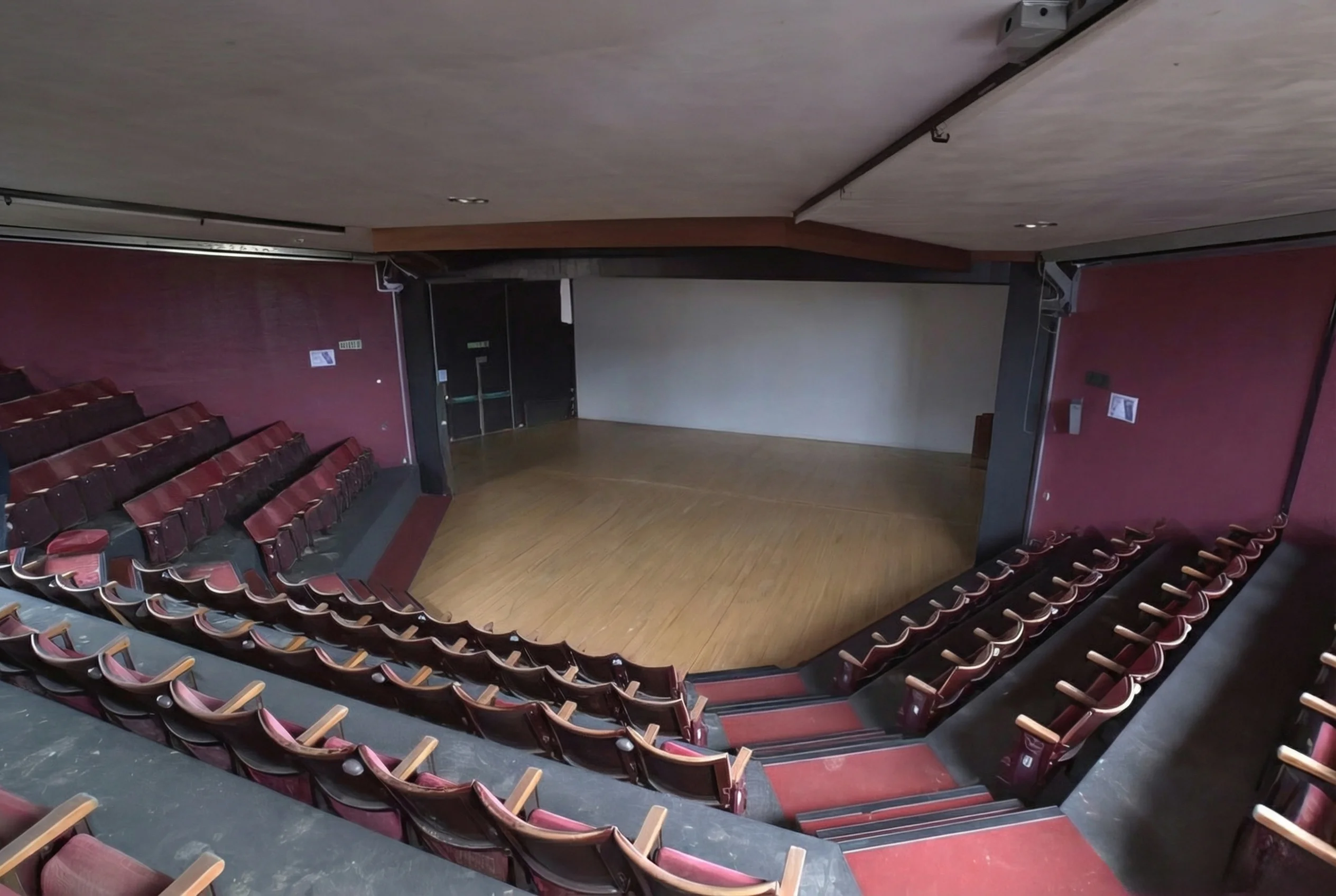
There is also something particularly haunting about remembering people rather than events. Buildings can be demolished and named as lost. Years can be closed off. But people vanish quietly. Those faces remain suspended in time, untouched by aging or outcome, standing in for a moment when connection felt abundant and unforced. They represent not relationships that ended, but possibilities that never had the chance to become anything at all.
In a post-internet world, moments rarely end. They persist as images, fragments, and references, endlessly retrievable. But this did not. It belonged to a world that assumed finitude — that allowed things to happen, matter deeply, and then disappear. That is what gives it its weight now. Time has moved on without hesitation, but the memory remains disproportionate, heavy not because it was perfect, but because it was fully lived and unrecoverable.
This post is timestamped using Blockchain technology. Verify
GPT-5.2-Codex
OpenAI:
Today we’re releasing GPT‑5.2-Codex, the most advanced agentic coding model yet for complex, real-world software engineering. GPT‑5.2-Codex is a version of GPT‑5.2 further optimised for agentic coding in Codex, including improvements on long-horizon work through context compaction, stronger performance on large code changes like refactors and migrations, improved performance in Windows environments, and significantly stronger cybersecurity capabilities.
GPT‑5.2-Codex builds on GPT‑5.2’s strengths in professional knowledge work and GPT‑5.1-Codex-Max's frontier agentic coding and terminal-using capabilities. GPT‑5.2-Codex is now better at long-context understanding, reliable tool calling, improved factuality, and native compaction, making it a more dependable partner for long running coding tasks, while remaining token-efficient in its reasoning.
This post is timestamped using Blockchain technology. Verify
Disclosure Day
Steven Spielberg is heading back into the realm of UFOs and alien contact with his upcoming science-fiction film Disclosure Day, marking a clear return to the thematic territory he helped define with landmark movies like Close Encounters of the Third Kind and E.T. the Extra-Terrestrial.
Disclosure Day centers on a pivotal, irreversible moment: the confirmation that humanity is not alone. Rather than relying on spectacle, early material suggests the film will dwell on the tension and ambiguity of discovery — the quiet pause before everything changes.
The cast is led by Emily Blunt and Josh O’Connor, supported by Colin Firth, Eve Hewson, and Colman Domingo. Behind the camera, Spielberg directs from a story of his own, with screenplay by long-time collaborator David Koepp. Composer John Williams returns as well, extending his decades-long partnership with the director.
Universal Pictures has scheduled the theatrical release for 12 June 2026. Early reactions to the teaser trailer underline both excitement and speculation, with discussion online drawing parallels to Spielberg’s earlier work in the genre.
For fans of thoughtful science fiction and Spielberg’s signature blend of emotional grounding and high concept, Disclosure Day is shaping up to be one of next summer’s biggest and most talked-about movies.
This post is timestamped using Blockchain technology. Verify
Unarchived Memories
What people often call nostalgia is too small a word for what many of us feel when we look back at life before the internet. This is not a sentimental longing for youth, nor a refusal to accept the present. It is something more structural: a recognition that whole stretches of lived experience now sit outside the modern systems of memory.
Large parts of everyday life before the internet were never meant to be archived. They existed as lived experience rather than data. Conversations were not logged, rooms were not photographed, ordinary streets on ordinary days were not documented. What remains today is not hidden behind a paywall or lost to poor search results — it simply does not exist. The absence is not a personal failure to find it. The record genuinely stops.
The internet age inverted this relationship with memory. Almost everything now leaves residue: photographs, timestamps, metadata, surveillance, backups. The present is endlessly replayable. Yet this abundance comes at a cost. Experience has become thinner, more mediated, more performative. What existed before was dense precisely because it was not designed to be recalled, shared, or optimised. It existed fully in the moment, and then it was gone.
This creates a quiet but persistent asymmetry. The years that mattered most are the least recoverable. The present, by contrast, is exhaustively documented but often less meaningful. No future technology, no amount of money, and no hypothetical AI will reconstruct what was never stored. At best, fragments can be triangulated: a photograph here, a programme listing there, an address, a date, a weather report. But continuity — the sense of being there again — is irretrievably broken.
This is the uncomfortable truth: much of what mattered most survives only inside the people who lived it. And as time passes, even that archive degrades. Memories blur, witnesses disappear, and the final copies fade. That does not make those years less real. It makes them more so. They were not designed to be revisited. They were designed to be lived once.
If there is any consolation, it is a sober one. To have lived fully in a time that left so little behind is to have experienced something that cannot be replicated, simulated, or accessed later by anyone else. That loss is real. But so was the life that produced it.
This post is timestamped using Blockchain technology. Verify
Fixing CloudFront HTTP/2 Configuration
While reviewing a GTmetrix performance report, I noticed unusually high server
response times despite having an A-grade score. The HAR file revealed that all
resources were being served over HTTP/1.1 instead of HTTP/2, even though I
believed HTTP/2 had been enabled previously. I queried my CloudFront
distribution using the AWS CLI and confirmed the HttpVersion setting was
indeed set to http1.1. I updated the distribution configuration to use HTTP/2,
which enables multiplexing (allowing multiple requests over a single connection)
and binary header compression. After the change propagated to CloudFront's edge
locations, I ran a second GTmetrix test. The results were striking: Largest
Contentful Paint dropped from 690ms to 167ms, Time to First Byte collapsed from
386ms to under 5ms, and the fully loaded time fell from 2 seconds to just 193ms.
The improvement came from two factors working together: HTTP/2's multiplexing
eliminated connection overhead, and the warmed CloudFront cache meant all
resources were served directly from the edge location without origin fetches.
This post is timestamped using Blockchain technology. Verify
Packets to a Silent Modem
Speculative fiction often frames communication with the past as a problem of infrastructure rather than magic. In works such as William Gibson’s The Peripheral, the enabling technology is imagined as an advanced quantum system capable of exchanging information across time, usually by exploiting ideas drawn from quantum mechanics or many-worlds theory. The key move is not literal time travel, but data transfer: messages, control signals, or sensory input passing between eras. This allows the future to talk to the past through networks that resemble an internet stretched across timelines. Crucially, these stories impose rules — no matter crosses the boundary, only information does, and the moment communication begins, a new branch of reality forms. This framing gives the technology a cold, infrastructural plausibility that feels modern and computational rather than fantastical.
However, even within physics-inspired speculation, this idea collapses under closer scrutiny. Quantum mechanics does not permit usable communication backward in time. Quantum entanglement, often invoked in fiction, cannot transmit information at all — let alone into the past — without a classical channel that obeys normal causality. Proposed workarounds, such as closed timelike curves or exotic spacetime geometries, remain mathematical curiosities with no experimental support and, in many cases, imply energy conditions that appear physically impossible. Even if a future civilisation mastered quantum computing far beyond anything imaginable today, it would still be bound by causality as we understand it. At best, speculative models allow correlations across timelines, not conversations with people who already lived, acted, and died in a fixed historical world like 1990.
There is also a more fundamental, and bleaker, barrier: both the finality of causality and the sheer antiquity of the technology that defined 1990. The networks of that era were fragile, local, and transient — dial-up modems hissing over analogue phone lines, CRT monitors driven by decaying phosphors, spinning hard drives and magnetic tape that relied on constant power, maintenance, and human presence. Those systems were never stable endpoints in any enduring sense; their signals vanished the moment they were received, their protocols were crude, and their physical substrates have long since degraded, been erased, or thrown away. Even if physics permitted a message to be sent backward in time, there is nothing left to receive it: no addressable infrastructure, no listening process still running inside that causal frame. The past is not merely unreachable because time forbids it; it is unreachable because its technology was built to disappear. 1990 is not a dormant node awaiting reconnection — it is a powered-down, dismantled world, beyond reach not just in theory, but in every practical, material sense. The past is not offline; it is gone.
This post is timestamped using Blockchain technology. Verify